Everything about Colorfulness
Perceived intensity of a specific color

Colorfulness, chroma and saturation are attributes of perceived color relating to chromatic intensity. As defined formally by the International Commission on Illumination (CIE) they respectively describe three different aspects of chromatic intensity, but the terms are often used loosely and interchangeably in contexts where these aspects are not clearly distinguished. The precise meanings of the terms vary by what other functions they are dependent on.Colorfulness is the "attribute of a visual perception according to which the perceived color of an area appears to be more or less chromatic ". The colorfulness evoked by an object depends not only on its spectral reflectance but also on the strength of the illumination, and increases with the latter unless the brightness is very high. Chroma is the "colorfulness of an area judged as a proportion of the brightness of a similarly illuminated area that appears white or highly transmitting". As a result, chroma is mostly only dependent on the spectral properties, and as such is seen to describe the object color. It is how different from a grey of the same lightness such an object color appears to be. Saturation is the "colorfulness of an area judged in proportion to its brightness", which in effect is the perceived freedom from whitishness of the light coming from the area. An object with a given spectral reflectance exhibits approximately constant saturation for all levels of illumination, unless the brightness is very high. Wikipedia →
🧭 Start here: a 6-step reading path
- Read the overview: ColorfulnessA 5-minute orientation
- Skim a recent paper: Colorfulness influences perceptions of valence and arousal.Influential work since 2022
- Pick up a classic book: Brown Bear, Brown Bear, What Do You See?The most-reprinted book on the subject
- Read the landmark paper: Visual attractiveness depends on colorfulness and color contrasts in mixed saladsCited 79 times
- Go sideways: CIECAM02A closely related topic
- Go sideways: LightnessA closely related topic
📖 Definitions
Noun The state of being colorful.
Noun The perceived intensity of a specific color.
🗂️ The subject at a glance
🏆 Landmark papers (most cited)
Visual attractiveness depends on colorfulness and color contrasts in mixed salads
Blind Quality Assessment of Tone-Mapped Images Considering Colorfulness, Naturalness, and Structure
Instagram user characteristics and the color of their photos: Colorfulness, color diversity, and color harmony
The colorful company: Effects of brand logo colorfulness on consumer judgments
Brightness, lightness, colorfulness, and chroma in CIECAM02 and CAM16
Tone-Mapped Image Quality Assessment for Electronics Displays by Combining Luminance Partition and Colorfulness Index
Underwater image enhancement with image colorfulness measure
Lighting spectrum to maximize colorfulness
🆕 Influential since 2022
Colorfulness influences perceptions of valence and arousal.
Getting away from death fear: How disease threat drives consumers' colorfulness seeking
Exploring the interplay of information relevance and colorfulness in multimedia learning
Trade-Off between Song Complexity and Colorfulness in Parid Birds
Less colorful = purer? The effect of packaging colorfulness on product purity perception
📚 Books worth reading
 Brown Bear, Brown Bear, What Do You See?Bill Martin Jr., Eric Carle · 1967
 Baby EinsteinJulie Aigner-Clark, Nadeem Zaidi · 2001
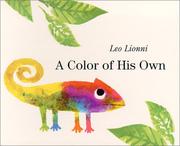 A Colour of his ownLeo Lionni · 1975
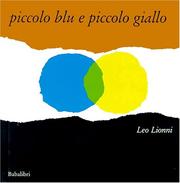 Little blue and little yellowLeo Lionni · 1959
 Ruby the Red FairyDaisy Meadows · 2003
 El Monstre De ColorsAnna Llenas · 2012
 Interaction of ColourJoseph Albers · 1963
 The Day the Crayons QuitDrew Daywalt · 2013
Ranked by number of editions on Open Library, a rough measure of how lasting a book is.
🔗 Related topics
- CIECAM02 In colorimetry, CIECAM02 is the color appearance model published in 2002 by the International Commission on Illumination (CIE) Technical Committee 8-01…
- Lightness Lightness is a visual perception of the luminance ( L ) {\displaystyle (L)} of an object. It is often judged relative to a similarly lit object. In colorimetry…
- CIELAB color space The CIELAB color space, also referred to as L*a*b*, is a color space defined by the International Commission on Illumination (abbreviated CIE) in 1976…
- Adams chromatic valence color space Adams chromatic valence color spaces are a class of color spaces suggested by Elliot Quincy Adams. Two important Adams chromatic valence spaces are CIELUV…
- List of color spaces and their uses This is a list of color spaces, grouped by the color model that is used for part of their specification. Color models can be based on physics or human…
- CIELUV In colorimetry, the CIE 1976 L*, u*, v* color space, commonly known by its abbreviation CIELUV, is a color space adopted by the International Commission…
- Chromaticity Chromaticity is an objective specification of the quality of a color regardless of its luminance. Chromaticity consists of two independent parameters,…
- Hunter Lab Hunter Lab (also known as Hunter L,a,b) is a color space defined in 1948 by Richard S. Hunter. It was designed to be computed via simple formulas from…