Live briefing

Everything about Library 2.0
Idea for new type of public library
Library 2.0 was a proposed concept for library services that facilitate user contributions and other features of Web 2.0, which includes online services such as OPAC systems. The term "Library 2.0" was coined by Michael Casey in 2006 on his blog Library Crunch. Wikipedia →
🧭 Start here: a 6-step reading path
- Read the overview: Library 2.0A 5-minute orientation
- Skim a recent paper: The ITensor Software Library for Tensor Network CalculationsInfluential work since 2022
- Pick up a classic book: Knitting the Semantic WebThe most-reprinted book on the subject
- Read the landmark paper: cclib: A library for package‐independent computational chemistry algorithmsCited 6,052 times
- Go sideways: Michael Gorman (librarian)A closely related topic
- Go sideways: Digital referenceA closely related topic
📖 Definitions
No dictionary entry for this exact phrase.
🏆 Landmark papers (most cited)
cclib: A library for package‐independent computational chemistry algorithms
ORB-SLAM3: An Accurate Open-Source Library for Visual, Visual–Inertial, and Multimap SLAM
Python Materials Genomics (pymatgen): A robust, open-source python library for materials analysis
The atomic simulation environment—a Python library for working with atoms
A Mammalian microRNA Expression Atlas Based on Small RNA Library Sequencing
Pure and Pseudo-pure Fluid Thermophysical Property Evaluation and the Open-Source Thermophysical Property Library CoolProp
PANTHER: A Library of Protein Families and Subfamilies Indexed by Function
MDTraj: A Modern Open Library for the Analysis of Molecular Dynamics Trajectories
🆕 Influential since 2022
📚 Books worth reading
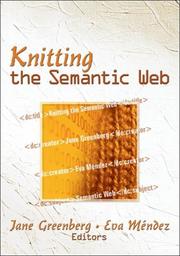 Knitting the Semantic WebJane Greenberg · 2007
 Web 2.0 and librariesDavid Parkes, Geoff Walton · 2010
- 📕Do You Web 2. 0?Linda Berube · 2009
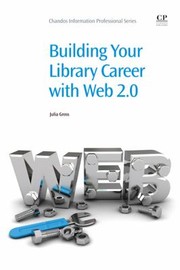 Building Your Library Career With Web 20Julia Gross · 2011
 User-generated content and its impact on web-based library servicesKay Cahill · 2009
 Building library 3.0Woody Evans · 2009
 Handbuch Bibliothek 2.0Julia Bergmann, Patrick Danowski · 2010
 Choosing Web 2.0 tools for learning and teaching in a digital worldPam Berger · 2010
Ranked by number of editions on Open Library, a rough measure of how lasting a book is.
🔗 Related topics
- Michael Gorman (librarian) Michael Gorman (born 6 March 1941) is a British-born librarian, library scholar and writer. During his tenure as president of the American Library Association…
- Digital reference Digital reference (more commonly called virtual reference) is a service by which a library reference service is conducted online, and the reference transaction…
- Web 2.0 Web 2.0 (also known as participative, participatory, web and social web) refers to websites that emphasize user-generated content, ease of use, participatory…
- Librarian A librarian is a person who professionally works with information management. The professional duties of librarians encompass a wide range of activities…
- Discovery system (bibliographic search) A discovery system is a bibliographic search system based on search engine technology. It is part of the concept of Library 2.0 and is intended to supplement…
- Neogeography Neogeography (literally "new geography") is the use of geographical techniques and tools for personal and community activities or by a non-expert group…
- Online public access catalog The online public access catalog (OPAC), now frequently synonymous with library catalog, is an online database of materials held by a library or group…
- Transliteracy Transliteracy is "a fluidity of movement across a range of technologies, media and contexts". It is an ability to use diverse techniques to collaborate…