Everything about Intelligence
Ability to perceive, infer, retain or apply information

Intelligence has been defined in many ways: the capacity for abstraction, logic, understanding, self-awareness, learning, emotional knowledge, reasoning, planning, creativity, critical thinking, and problem-solving. It can be described as the ability to perceive or infer information and to retain it as knowledge to be applied to adaptive behaviors within an environment or context. Wikipedia →
🧭 Start here: a 6-step reading path
- Read the overview: IntelligenceA 5-minute orientation
- Skim a recent paper: Revolutionizing healthcare: the role of artificial intelligence in clinical practiceInfluential work since 2022
- Pick up a classic book: Our Man in HavanaThe most-reprinted book on the subject
- Read the landmark paper: High-performance medicine: the convergence of human and artificial intelligenceCited 10,189 times
- Go sideways: Human intelligenceA closely related topic
- Go sideways: Emotional intelligenceA closely related topic
📖 Definitions
Noun The capacity of mind, especially to understand principles, truths, facts or meanings, acquire knowledge, and apply it to practice; the ability to comprehend and learn; the ability to process sentient experience to generate true beliefs with a justified degree of confidence.
Noun An individual's expected relative performance in a cognitive test.
Noun The quality of making use or having made use of such capacities: depth of understanding, mental quickness.
Noun An entity that has such capacities.
🗂️ The subject at a glance
🏆 Landmark papers (most cited)
High-performance medicine: the convergence of human and artificial intelligence
Explainable Artificial Intelligence (XAI): Concepts, taxonomies, opportunities and challenges toward responsible AI
I.—COMPUTING MACHINERY AND INTELLIGENCE
Emotional Intelligence
Systematic review of research on artificial intelligence applications in higher education – where are the educators?
Peeking Inside the Black-Box: A Survey on Explainable Artificial Intelligence (XAI)
A practical tutorial on the use of nonparametric statistical tests as a methodology for comparing evolutionary and swarm intelligence algorithms
Business Intelligence and Analytics: From Big Data to Big Impact
🆕 Influential since 2022
Revolutionizing healthcare: the role of artificial intelligence in clinical practice
Comparing Physician and Artificial Intelligence Chatbot Responses to Patient Questions Posted to a Public Social Media Forum
Interpreting Black-Box Models: A Review on Explainable Artificial Intelligence
Foundation models for generalist medical artificial intelligence
Experimental evidence on the productivity effects of generative artificial intelligence
📚 Books worth reading
 Our Man in HavanaGraham Greene · 1958
 The Hunt for Red OctoberTom Clancy · 1984
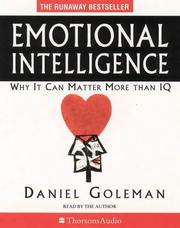 Emotional IntelligenceDaniel Goleman · 1995
 The Looking Glass WarJohn le Carré · 1965
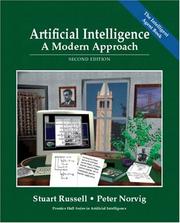 Artificial intelligenceStuart J. Russell, Peter Norvig · 1994
 Klara and the SunKazuo Ishiguro · 2019
 The principles of psychologyHerbert Spencer · 1855
 Demon SeedDean Koontz · 1973
Ranked by number of editions on Open Library, a rough measure of how lasting a book is.
🔗 Related topics
- Human intelligence Human intelligence is the intellectual capability of humans, which is marked by complex cognitive feats and high levels of motivation and self-awareness…
- Emotional intelligence Emotional intelligence (EI), also known as emotional quotient (EQ), is the ability to perceive, use, understand, manage, and handle emotions. High emotional…
- Cattell–Horn–Carroll theory The Cattell–Horn–Carroll theory (commonly abbreviated to CHC), is a psychological theory on the structure of human cognitive abilities. Based on the work…
- G factor (psychometrics) The g factor is a construct developed in psychometric investigations of cognitive abilities and human intelligence that summarizes positive correlations…
- Intelligence quotient An intelligence quotient (IQ) is a total score derived from a set of standardised tests or subtests designed to assess human intelligence. Originally,…
- Theory of multiple intelligences The theory of multiple intelligences (MI) posits that human intelligence is not a single general ability but comprises various distinct modalities, such…
- Domain-general learning Domain-general learning theories of development suggest that humans are born with mechanisms in the brain that exist to support and guide learning on a…
- Outline of human intelligence The following outline is provided as an overview of and topical guide to human intelligence: Human intelligence is, in the human species, the mental capacities…