Live briefing

Everything about Human intelligence
Human capacity or ability to acquire, apprehend and apply knowledge
Human intelligence is the intellectual capability of humans, which is marked by complex cognitive feats and high levels of motivation and self-awareness. Using their intelligence, humans are able to learn, form concepts, understand, and apply logic and reason. Human intelligence is also thought to encompass their capacities to recognize patterns, plan, innovate, solve problems, make decisions, retain information, and use language to communicate. Wikipedia →
🧭 Start here: a 6-step reading path
- Read the overview: Human intelligenceA 5-minute orientation
- Skim a recent paper: Artificial intelligence, human intelligence and hybrid intelligence based on mutual augmentationInfluential work since 2022
- Pick up a classic book: I, RobotThe most-reprinted book on the subject
- Read the landmark paper: High-performance medicine: the convergence of human and artificial intelligenceCited 10,184 times
- Go sideways: G factor (psychometrics)A closely related topic
- Go sideways: Intelligence and personalityA closely related topic
📖 Definitions
Noun Intelligence-gathering by means of human sources and interpersonal communication.
🗂️ The subject at a glance
🏆 Landmark papers (most cited)
High-performance medicine: the convergence of human and artificial intelligence
Human Abilities: Emotional Intelligence
Fractionating Human Intelligence
Social intelligence, human intelligence and niche construction
Using Artificial Intelligence to Augment Human Intelligence
Components of human intelligence
On human social intelligence
Understanding Human Intelligence through Human Limitations
🆕 Influential since 2022
Artificial intelligence, human intelligence and hybrid intelligence based on mutual augmentation
Beyond human-in-the-loop: Sensemaking between artificial intelligence and human intelligence collaboration
Artificial Intelligence in Human Reproduction
Human achievement and artificial intelligence
Artificial Intelligence in Human Medicine
📚 Books worth reading
 I, RobotIsaac Asimov · 1950
 PreyMichael Crichton · 2002
 Hereditary geniusSir Francis Galton · 1869
 Hellstrom's HiveFrank Herbert · 1973
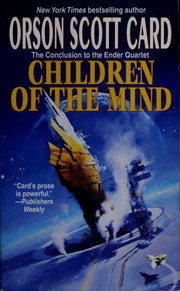 Children of the MindOrson Scott Card · 1996
 ExhalationTed Chiang · 2014
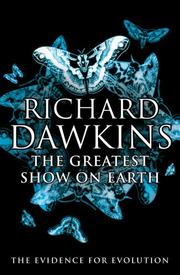 The Greatest Show on EarthRichard Dawkins · 2009
 Tides of LightGregory Benford · 1989
Ranked by number of editions on Open Library, a rough measure of how lasting a book is.
🔗 Related topics
- G factor (psychometrics) The g factor is a construct developed in psychometric investigations of cognitive abilities and human intelligence that summarizes positive correlations…
- Intelligence and personality Intelligence and personality have traditionally been studied as separate entities in psychology, but more recent work has increasingly challenged this…
- Intelligence Intelligence has been defined in many ways: the capacity for abstraction, logic, understanding, self-awareness, learning, emotional knowledge, reasoning…
- Intelligence quotient An intelligence quotient (IQ) is a total score derived from a set of standardised tests or subtests designed to assess human intelligence. Originally,…
- Cattell–Horn–Carroll theory The Cattell–Horn–Carroll theory (commonly abbreviated to CHC), is a psychological theory on the structure of human cognitive abilities. Based on the work…
- Theory of multiple intelligences The theory of multiple intelligences (MI) posits that human intelligence is not a single general ability but comprises various distinct modalities, such…
- Emotional intelligence Emotional intelligence (EI), also known as emotional quotient (EQ), is the ability to perceive, use, understand, manage, and handle emotions. High emotional…
- Colin Cooper (psychologist) Colin Cooper is a British psychologist and was a senior lecturer in the School of Psychology at Queen's University Belfast until 2012, when he took early…