Live briefing
Everything about Help-seeking
Theory in psychology
Help-seeking theory postulates that people follow a series of predictable steps to seek help for their inadequacies. It is a series of well-ordered and purposeful cognitive and behavioral steps, each leading to specific types of solutions. Wikipedia →
🧭 Start here: a 6-step reading path
- Read the overview: Help-seekingA 5-minute orientation
- Skim a recent paper: Trends in college student mental health and help-seeking by race/ethnicity: Findings from the national healthy minds study, 2013–2021Influential work since 2022
- Pick up a classic book: Owl Diaries Eva's Treetop FestivalThe most-reprinted book on the subject
- Read the landmark paper: Perceived barriers and facilitators to mental health help-seeking in young people: a systematic reviewCited 2,700 times
- Go sideways: Self-regulated learningA closely related topic
- Go sideways: MetacognitionA closely related topic
📖 Definitions
No dictionary entry for this exact phrase.
🗂️ The subject at a glance
🏆 Landmark papers (most cited)
Perceived barriers and facilitators to mental health help-seeking in young people: a systematic review
What is the impact of mental health-related stigma on help-seeking? A systematic review of quantitative and qualitative studies
Men, masculinity, and the contexts of help seeking.
Mental Health Problems and Help-Seeking Behavior Among College Students
Men and health help‐seeking behaviour: literature review
Young people’s help-seeking for mental health problems
Epidemiology of insomnia: Prevalence, self-help treatments, consultations, and determinants of help-seeking behaviors
The role of masculinity in men's help-seeking for depression: A systematic review
🆕 Influential since 2022
Trends in college student mental health and help-seeking by race/ethnicity: Findings from the national healthy minds study, 2013–2021
Intimate Partner Violence and Barriers to Help-Seeking Among Black, Asian, Minority Ethnic and Immigrant Women: A Qualitative Metasynthesis of Global Research
Barriers and facilitators of older adults for professional mental health help-seeking: a systematic review
Global prevalence of help‐seeking for problem gambling: A systematic review and meta‐analysis
Mental illness and help-seeking behaviours among Middle Eastern cultures: A systematic review and meta-synthesis of qualitative data
📚 Books worth reading
 Owl Diaries Eva's Treetop FestivalRebecca Elliott · 2015
 Help seeking in academic settingsStuart A. Karabenick, Richard S. Newman · 2006
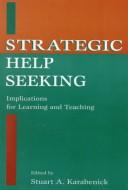 Strategic help seekingStuart A. Karabenick · 1998
- 📕I Just Want to Do It My Way!Julia Cook, Kelsey De Weerd · 2013
- 📕Selected factors related to help-seeking behavior in college women victims of sexual coercionRoberta J. Ogletree · 1991
- 📕Factors influencing family use of health care services in Tamil Nadu (India) villagesAnna K. Williamson Harding · 1990
 The art of askingAmanda Palmer · 2014
- 📕Help-seeking for mental health servicesDaniel Joseph Lord-Flynn · 1989
Ranked by number of editions on Open Library, a rough measure of how lasting a book is.
🔗 Related topics
- Self-regulated learning Self-regulated learning (SRL) is one of the domains of self-regulation, and is aligned most closely with educational aims. Broadly speaking, it refers…
- Metacognition Metacognition is an awareness of one's thought processes and an understanding of the patterns behind them. In simple terms it is "to think about one's…
- Implicit theories of intelligence In social and developmental psychology, an individual's implicit theory of intelligence refers to his or her fundamental underlying beliefs regarding whether…
- Coping Coping refers to the application of coping mechanisms, conscious and unconscious cognitions that people use to manage unpleasant emotions, stress, and…
- Social emotional development Social emotional development represents a specific domain of child development. It is a gradual, integrative process through which children acquire the…
- Goal orientation Goal orientation, or achievement orientation, is an "individual disposition towards developing or validating one's ability in achievement settings". In…
- Control (psychology) In psychology, control is a person's ability or perception of their ability to affect themselves, others, their conditions, their environment or some other…
- Self-efficacy In psychology, self-efficacy is an individual's belief in their capacity to act in the ways necessary to reach specific goals. The concept was originally…