Everything about Coping
Strategies used to reduce unpleasant emotions
Coping refers to the application of coping mechanisms, conscious and unconscious cognitions that people use to manage unpleasant emotions, stress, and anxiety. Coping mechanisms can be adaptive, meaning that they successfully improve the well-being of the person applying them, or maladaptive, meaning they may manage a specific unpleasant emotion, but at the expense of other aspects of one's mental and/or physical health. Wikipedia →
🧭 Start here: a 6-step reading path
- Read the overview: CopingA 5-minute orientation
- Skim a recent paper: Challenges of photocatalysis and their coping strategiesInfluential work since 2022
- Pick up a classic book: The hidden persuadersThe most-reprinted book on the subject
- Read the landmark paper: Assessing coping strategies: A theoretically based approach.Cited 7,951 times
- Go sideways: Emotional approach copingA closely related topic
- Go sideways: Defence mechanismA closely related topic
📖 Definitions
Noun The top layer of a brick wall, especially one that slopes in order to throw off water.
Noun The process of managing taxing circumstances, expending effort to solve personal and interpersonal problems, and seeking to master, minimize, reduce or tolerate stress or conflict.
Noun The process of clipping the beak or talons of a bird.
Verb present participle and gerund of cope
🗂️ The subject at a glance
🏆 Landmark papers (most cited)
Assessing coping strategies: A theoretically based approach.
You want to measure coping but your protocol’ too long: Consider the brief cope
The Structure of Coping
Optimism, coping, and health: Assessment and implications of generalized outcome expectancies.
An Analysis of Coping in a Middle-Aged Community Sample
Dynamics of a stressful encounter: Cognitive appraisal, coping, and encounter outcomes.
If it changes it must be a process: Study of emotion and coping during three stages of a college examination.
Source Partitioning Using Stable Isotopes: Coping with Too Much Variation
🆕 Influential since 2022
Challenges of photocatalysis and their coping strategies
Brassinosteroids (BRs) Role in Plant Development and Coping with Different Stresses
Concept of mental health and mental well-being, it's determinants and coping strategies
Identifying Types of Eco-Anxiety, Eco-Guilt, Eco-Grief, and Eco-Coping in a Climate-Sensitive Population: A Qualitative Study
Drought Stress Responses: Coping Strategy and Resistance
📚 Books worth reading
 The hidden persuadersVance Packard · 1957
 JoniJoni Eareckson Tada, Joni Eareckson-Tada · 1976
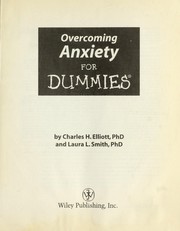 Overcoming Anxiety for DummiesCharles H. Elliott, Ph.D., Laura L. Smith Ph.D. · 2002
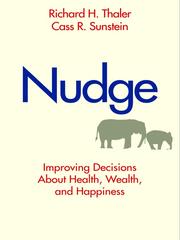 NudgeRichard H. Thaler, Cass R. Sunstein · 2008
 Trauma and RecoveryJudith Lewis Herman · 1901
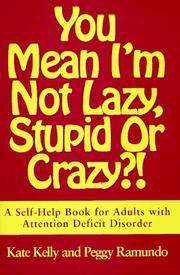 You mean I'm not lazy, stupid or crazy?!Kate Kelly, Peggy Ramundo · 1993
 It Will Never Happen to MeClaudia Black · 1982
 Changing for goodJames O. Prochaska, John Norcross · 1994
Ranked by number of editions on Open Library, a rough measure of how lasting a book is.
🔗 Related topics
- Emotional approach coping Emotional approach coping is a psychological construct that involves the use of emotional processing and emotional expression in response to a stressful…
- Defence mechanism In psychoanalytic theory, defense mechanisms are unconscious psychological processes that protect the self from anxiety-producing thoughts and feelings…
- Cognitive appraisal Cognitive appraisal (also called simply 'appraisal') is the subjective interpretation made by an individual to stimuli in the environment. It is a component…
- Self-blame (psychology) Self-blame is a cognitive process in which an individual attributes the occurrence of a stressful event to oneself. The direction of blame often has implication…
- Psychological stress In psychology, stress is a feeling of emotional strain and pressure. Stress is a form of psychological and mental discomfort. Small amounts of stress may…
- Interpersonal emotion regulation Interpersonal emotion regulation is the process of changing the emotional experience of one's self or another person through social interaction. It encompasses…
- Psychological trauma Psychological trauma (also known as mental trauma, psychiatric trauma, emotional damage, or psychotrauma) is an emotional response caused by severe, distressing…
- Basic anxiety Basic anxiety is a term used by psychoanalytic theorist Karen Horney. She believed that neurosis resulted from basic anxiety caused by interpersonal relationshi…