Live briefing

Everything about Genome evolution
Process by which a genome changes in structure or size over time
Genome evolution is the process by which a genome changes in structure (sequence) or size over time. The study of genome evolution involves multiple fields such as structural analysis of the genome, the study of genomic parasites, gene and ancient genome duplications, polyploidy, and comparative genomics. Genome evolution is a constantly changing and evolving field due to the steadily growing number of sequenced genomes, both prokaryotic and eukaryotic, available to the scientific community and the public at large. Wikipedia →
🧭 Start here: a 6-step reading path
- Read the overview: Genome evolutionA 5-minute orientation
- Skim a recent paper: Dynamic genome evolution in a model fernInfluential work since 2022
- Pick up a classic book: Introduction to genetic analysisThe most-reprinted book on the subject
- Read the landmark paper: Genome evolution in yeastsCited 1,469 times
- Go sideways: PseudogeneA closely related topic
- Go sideways: Molecular evolutionA closely related topic
📖 Definitions
No dictionary entry for this exact phrase.
🏆 Landmark papers (most cited)
Genome evolution in yeasts
Genome evolution in polyploids
Genome dynamics during experimental evolution
Genome graphs and the evolution of genome inference
Measuring genome evolution
Evolution of genome architecture
Codon usage and genome evolution
Dinoflagellate Genome Evolution
🆕 Influential since 2022
📚 Books worth reading
 Introduction to genetic analysisAnthony J. F. Griffiths, Susan R. Wessler · 1993
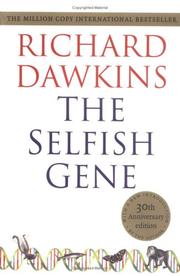 The Selfish GeneRichard Dawkins · 1976
 Evolutionary BiologyPierre Pontarotti · 2009
 Reflections of our pastJohn Relethford, John H. Relethford · 2003
 A Brief History of Everyone Who Ever LivedAdam Rutherford, Siddhartha Mukherjee · 2016
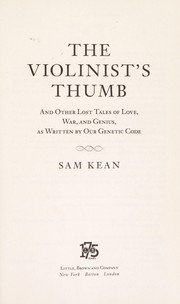 The violinist's thumbSam Kean · 2012
 The epigenetics revolutionNessa Carey · 2011
 Who we are and how we got hereDavid Reich · 2018
Ranked by number of editions on Open Library, a rough measure of how lasting a book is.
🔗 Related topics
- Pseudogene Pseudogenes are nonfunctional segments of DNA that resemble functional genes. Pseudogenes can be formed from both protein-coding genes and non-coding genes…
- Molecular evolution Molecular evolution describes how inherited DNA and/or RNA change over evolutionary time, and the consequences of this for proteins and other components…
- Coding region The coding region of a gene, also known as the coding DNA sequence (CDS), is the portion of a gene's DNA or RNA that codes for a protein. Studying the…
- Genome In the fields of molecular biology and genetics, a genome is all the genetic information of an organism. It consists of nucleotide sequences of DNA (or…
- Mutation In biology, a mutation is an alteration in the nucleic acid sequence of the genome of an organism, virus, or extrachromosomal DNA. Mutations result from…
- Intron An intron is any nucleotide sequence within a gene that is not expressed or operative in the final RNA product. The word intron is derived from the term…
- Gene family A gene family is a set of several similar genes, formed by duplication of a single original gene, and generally with similar biochemical functions. One…
- Gene duplication Gene duplication (or chromosomal duplication or gene amplification) is a mechanism through which new genetic material is generated during molecular evolution…