Everything about Genetic code
Rules by which information encoded within genetic material is translated into proteins

Genetic code is a set of rules used by living cells to translate information encoded within genetic material into proteins. Translation is accomplished by the ribosome, which links proteinogenic amino acids in an order specified by messenger RNA (mRNA), using transfer RNA (tRNA) molecules to carry amino acids and to read the mRNA three nucleotides at a time. The genetic code is highly similar among all organisms and can be expressed in a simple table with 64 entries. Wikipedia →
🧭 Start here: a 6-step reading path
- Read the overview: Genetic codeA 5-minute orientation
- Skim a recent paper: Genetic Code Expansion: Recent Developments and Emerging ApplicationsInfluential work since 2022
- Pick up a classic book: The double helixThe most-reprinted book on the subject
- Read the landmark paper: EXPANDING THE GENETIC CODECited 567 times
- Go sideways: Nirenberg and Leder experimentA closely related topic
- Go sideways: Nirenberg and Matthaei experimentA closely related topic
📖 Definitions
Noun The set of rules by which the sequence of bases in DNA are translated into the amino acid sequence of proteins.
🗂️ The subject at a glance
🏆 Landmark papers (most cited)
EXPANDING THE GENETIC CODE
Reprogramming the genetic code
Expanding the genetic code
Rewriting the Genetic Code
The second genetic code
The Genetic Code: III
An expanding genetic code
Genetic Code Ambiguity
🆕 Influential since 2022
Genetic Code Expansion: Recent Developments and Emerging Applications
Genetic Code Expansion History and Modern Innovations
Codetta: predicting the genetic code from nucleotide sequence
Cellular and Biophysical Applications of Genetic Code Expansion
Genetic Code Expansion Through Quadruplet Codon Decoding
📚 Books worth reading
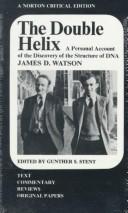 The double helixJames D. Watson, Grover Gardner narrator · 1968
 The Genetic CodeIsaac Asimov · 1936
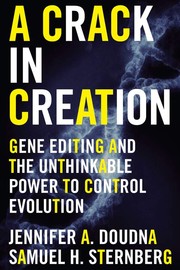 A Crack in CreationJennifer A. Doudna, Samuel H. Sternberg · 2017
 What mad pursuitFrancis Crick · 1988
- 📕Least Likely ManFranklin H. Portugal · 2015
 The code of lifeErnest Borek · 1965
 Nutrients and epigeneticsSang-Woon Choi, Simonetta Friso · 2009
- 📕Analysis of Protein Post-Translational Modifications by Mass SpectrometryJohn R. Griffiths, Richard D. Unwin · 2016
Ranked by number of editions on Open Library, a rough measure of how lasting a book is.
🔗 Related topics
- Nirenberg and Leder experiment The Nirenberg and Leder experiment was a scientific experiment performed in 1964 by Marshall W. Nirenberg and Philip Leder. The experiment elucidated the…
- Nirenberg and Matthaei experiment The Nirenberg and Matthaei experiment was a scientific experiment performed in May 1961 by Marshall W. Nirenberg and his post-doctoral fellow, J. Heinrich…
- Frameshift mutation experiment The Crick, Brenner et al. experiment (1961) was a scientific experiment performed by Francis Crick, Sydney Brenner, Leslie Barnett and Richard Watts-Tobin…
- DNA and RNA codon tables A codon table can be used to translate a genetic code into a sequence of amino acids. The standard genetic code is traditionally represented as an RNA…
- Stop codon In molecular biology, a stop codon (or termination codon) is a codon (nucleotide triplet within messenger RNA) that signals the termination of the translation…
- RNA Tie Club The RNA Tie Club was an informal scientific club, meant partly to be humorous, of select scientists who were interested in how proteins were synthesised…
- Expanded genetic code An expanded genetic code is an artificially modified genetic code in which one or more specific codons have been re-allocated to encode an amino acid that…
- Central dogma of molecular biology The central dogma of molecular biology deals with the flow of genetic information within a biological system. It is often stated as "DNA makes RNA, and…