Live briefing
Everything about Fluency
Ability to deliver information quickly and correctly
Fluency refers to continuity, smoothness, rate, and effort in speech production. It is also used to characterize language production, language ability or language proficiency. Wikipedia →
🧭 Start here: a 6-step reading path
- Read the overview: FluencyA 5-minute orientation
- Skim a recent paper: Sex/Gender Differences in Verbal Fluency and Verbal-Episodic Memory: A Meta-AnalysisInfluential work since 2022
- Pick up a classic book: Night NoisesThe most-reprinted book on the subject
- Read the landmark paper: Processing Fluency and Aesthetic Pleasure: Is Beauty in the Perceiver's Processing Experience?Cited 2,369 times
- Go sideways: Second-language acquisitionA closely related topic
- Go sideways: Critical period hypothesisA closely related topic
📖 Definitions
Noun The quality of smoothness of flow.
Noun The quality of being fluent in a language; a person's command of a particular language.
Noun The quality of consistently applying skill correctly in the manner of one well-practiced at it, requiring little deliberate thought to perform without mistakes
Noun The inherent ability to use a language easily and accurately.
🗂️ The subject at a glance
🏆 Landmark papers (most cited)
Processing Fluency and Aesthetic Pleasure: Is Beauty in the Perceiver's Processing Experience?
Uniting the Tribes of Fluency to Form a Metacognitive Nation
Bringing the Frame Into Focus: The Influence of Regulatory Fit on Processing Fluency and Persuasion.
Clustering and switching as two components of verbal fluency: Evidence from younger and older healthy adults.
Toward an Interactive-Compensatory Model of Individual Differences in the Development of Reading Fluency
Word fluency and brain damage
Effects of Perceptual Fluency on Affective Judgments
Oral Reading Fluency as an Indicator of Reading Competence: A Theoretical, Empirical, and Historical Analysis
🆕 Influential since 2022
Sex/Gender Differences in Verbal Fluency and Verbal-Episodic Memory: A Meta-Analysis
The influence of emoji meaning multipleness on perceived online review helpfulness: The mediating role of processing fluency
Cortical activation and functional connectivity during the verbal fluency task for adolescent-onset depression: A multi-channel NIRS study
The multidimensionality of second language oral fluency: Interfacing cognitive fluency and utterance fluency
To what extent are foreign language anxiety and foreign language enjoyment related to L2 fluency? An investigation of task-specific emotions and breakdown and speed fluency in an oral task
📚 Books worth reading
 Night NoisesMem Fox, Terry Denton · 1989
 Fluent ForeverGabriel Wyner · 2014
 Second Language Speech FluencyParvaneh Tavakoli, Clare Wright · 2020
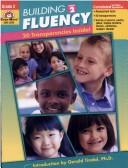 Building FluencyCompilation · 2006
 Developing Fluent ReadersMelanie R. Kuhn, Lorell Levy · 2014
 The six-minute solutionGail N. Adams · 2007
- 📕Aktualʹnye voprosy lingvistiki i sovremennye problemy prepodavanii︠a︡ russkogo i︠a︡zyka i razvitii︠a︡ rechi uchashchikhsi︠a︡ i studentovE. I. Nikitina · 2008
 From phonics to fluencyTimothy V Rasinski, Timothy V. Rasinski · 2000
Ranked by number of editions on Open Library, a rough measure of how lasting a book is.
🔗 Related topics
- Second-language acquisition Second-language acquisition (SLA), second-language learning or L2 (language 2) acquisition, is the process of learning a language other than one's native…
- Critical period hypothesis The critical period hypothesis is a hypothesis within the field of linguistics and second language acquisition that claims a person can achieve native-like…
- Second language A second language (L2) is a language spoken in addition to one's first language (L1). A second language may be a neighbouring language, another language…
- Individual variation in second-language acquisition Individual variation in second-language acquisition is the study of why some people learn a second language better than others. Unlike children who acquire…
- Second-language acquisition classroom research Second-language acquisition classroom research is an area of research in second-language acquisition concerned with how people learn languages in educational…
- Sequential bilingualism Sequential bilingualism occurs when a person becomes bilingual by first learning one language and then another. The process is contrasted with simultaneous…
- Outline of second-language acquisition The following outline is provided as an overview of and topical guide to second-language acquisition: Second-language acquisition – process by which people…
- Interlanguage An interlanguage is an idiolect developed by a learner of a second language (L2) which preserves some features of their first language (L1) and can overgenerali…