Everything about Interlanguage
Idiolect used by a second language learner
An interlanguage is an idiolect developed by a learner of a second language (L2) which preserves some features of their first language (L1) and can overgeneralize some L2 writing and speaking rules. These two characteristics give an interlanguage its unique linguistic organization. It is idiosyncratically based on the learner's experiences with L2. An interlanguage can fossilize, or cease developing, in any of its developmental stages. Several factors can shape interlanguage rules, including L1 transfer, previous learning strategies, strategies of L2 acquisition, L2 communication strategies, and the overgeneralization of L2 language patterns. Wikipedia →
🧭 Start here: a 6-step reading path
- Read the overview: InterlanguageA 5-minute orientation
- Skim a recent paper: An exploratory study of the interlanguage pragmatic comprehension of young learners of EnglishInfluential work since 2022
- Pick up a classic book: In altre paroleThe most-reprinted book on the subject
- Read the landmark paper: INTERLANGUAGECited 1,758 times
- Go sideways: Generative second-language acquisitionA closely related topic
- Go sideways: Second-language acquisitionA closely related topic
📖 Definitions
Noun A language generated by a student of a foreign language that incorporates aspects of their native language and the target language.
Noun A lingua franca, a common language used by speakers of different languages
Noun A pidgin or creole
🏆 Landmark papers (most cited)
INTERLANGUAGE
Group Work, Interlanguage Talk, and Second Language Acquisition
The interlanguage speech intelligibility benefit
Research Methods in Interlanguage Pragmatics
THE COMPARATIVE FALLACY IN INTERLANGUAGE STUDIES: THE CASE OF SYSTEMATICITY1
Developing L2 Oral Proficiency through Synchronous CMC: Output, Working Memory, and Interlanguage Development
COMMUNICATION STRATEGIES, FOREIGNER TALK, AND REPAIR IN INTERLANGUAGE 1
Developmental Issues in Interlanguage Pragmatics
🆕 Influential since 2022
An exploratory study of the interlanguage pragmatic comprehension of young learners of English
Reconsidering the development of the discourse completion test in interlanguage pragmatics
The use of interlanguage pragmatic learning strategies (IPLS) by L2 learners: the impact of age, gender, language learning experience, and L2 proficiency levels
When A Nonnative Accent Lets You Spot All the Errors: Examining the Syntactic Interlanguage Benefit
Tense and aspect in the interlanguage of Slavic speakers learning Romance languages
📚 Books worth reading
 In altre paroleJhumpa Lahiri · 2015
 Second Language PragmaticsNaoko Taguchi, Carsten Roever · 2017
- 📕Rediscovering InterlanguageLarry Selinker, William E. Rutherford · 2013
 Learning to Request in a Second LanguageMachiko Achiba · 2003
 Heritage and School Language Literacy Development in Migrant ChildrenRaphael Berthele · 2017
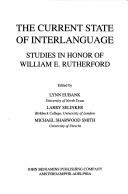 The current state of interlanguageWilliam E. Rutherford, Lynn Eubank · 1995
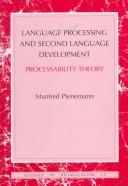 Language processing and second language developmentManfred Pienemann · 1998
- 📕Lingue a metàAntonino Di Sparti · 1993
Ranked by number of editions on Open Library, a rough measure of how lasting a book is.
🔗 Related topics
- Generative second-language acquisition The generative approach to second language (L2) acquisition (SLA) is a cognitive based theory of SLA that applies theoretical insights developed from within…
- Second-language acquisition Second-language acquisition (SLA), second-language learning or L2 (language 2) acquisition, is the process of learning a language other than one's native…
- Theories of second-language acquisition The main purpose of theories of second-language acquisition (SLA) is to shed light on how people who already know one language learn a second language…
- Communication strategies in second-language acquisition In the course of learning a second language, learners will frequently encounter communication problems caused by a lack of linguistic resources. Communication…
- Second language A second language (L2) is a language spoken in addition to one's first language (L1). A second language may be a neighbouring language, another language…
- Elaine Tarone Elaine Tarone is a retired professor of applied linguistics and is a distinguished teaching professor emerita at the University of Minnesota. She is currently…
- Error (linguistics) In applied linguistics, an error is an unintended deviation from the immanent rules of a language variety made by a second language learner. Such errors…
- Contrastive analysis Contrastive analysis is the systematic study of a couple of languages with a view to identifying their structural differences and similarities. Historically…