Everything about Effect size
Statistical measure of the magnitude of a phenomenon
In statistics, an effect size is a quantitative measure of the magnitude and often direction of a phenomenon. It can refer to the value of a statistic calculated from a sample of data, the value of one parameter for a hypothetical population, or the equation that operationalizes how statistics or parameters lead to the effect size value. Examples of effect sizes include the correlation between two variables, the regression coefficient in a regression, the mean difference, the standardised mean differences, and the risk of a particular event. Effect sizes are a complementary tool for statistical hypothesis testing, and play an important role in statistical power analyses to assess the sample size required for new experiments. Effect size calculations are fundamental to meta-analysis, which aims to provide the combined effect size based on data from multiple studies. The group of data-analysis methods concerning effect sizes is referred to as estimation statistics. Wikipedia →
🧭 Start here: a 6-step reading path
- Read the overview: Effect sizeA 5-minute orientation
- Skim a recent paper: Effect size guidelines for cross-lagged effects.Influential work since 2022
- Pick up a classic book: Advances in Ecological ResearchThe most-reprinted book on the subject
- Read the landmark paper: Calculating and reporting effect sizes to facilitate cumulative science: a practical primer for t-tests and ANOVAsCited 8,963 times
- Go sideways: Pooled varianceA closely related topic
- Go sideways: Student's t-testA closely related topic
📖 Definitions
Noun A measure of the strength or magnitude of the effect of an independent variable on a dependent variable in an experiment or a quasi-experiment.
🗂️ The subject at a glance
🏆 Landmark papers (most cited)
Calculating and reporting effect sizes to facilitate cumulative science: a practical primer for t-tests and ANOVAs
Using Effect Size—or Why the P Value Is Not Enough
On effect size.
Correlational effect size benchmarks.
Size effect
INDUCED SIZE EFFECT
The disappearing size effect
Measures of effect size
🆕 Influential since 2022
Effect size guidelines for cross-lagged effects.
Effect of Size, Shape and Surface Functionalization on the Antibacterial Activity of Silver Nanoparticles
Effects of nanoparticle size, shape, and zeta potential on drug delivery
ZnO size and shape effect on antibacterial activity and cytotoxicity profile
📚 Books worth reading
 Advances in Ecological ResearchM. Begon, Alastair Fitter · 1988
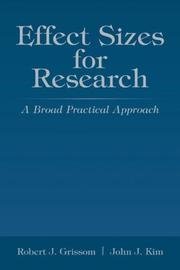 Effect sizes for researchRobert J. Grissom · 2005
- 📕Structure of a swirl-stabilized combusting sprayDaniel L. Bulzan · 1994
 Maybe oneBill McKibben · 1998
 Powers of tenPhilip Morrison, Phylis Morrison · 1982
- 📕Legislative proposal entitled "Class-Size Reduction and Teacher Quality Act of 1998"United States. President (1993-2001 : Clinton) · 1998
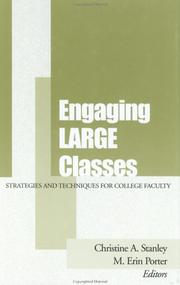 Engaging large classesChristine A. Stanley · 2002
- 📕Proceedings of the Flat-Plate Solar Array Project Research Forum on Photovoltaic Metallization SystemsFlat-Plate Solar Array Project Research Forum on Photovoltaic Metallization Systems (1983 Pine Mountain, Ga.) · 1983
Ranked by number of editions on Open Library, a rough measure of how lasting a book is.
🔗 Related topics
- Pooled variance In statistics, pooled variance (also known as combined variance, composite variance, or overall variance, and written σ2) is a method for estimating variance…
- Student's t-test Student's t-test is a statistical test used to test whether the difference between the response of two groups is statistically significant or not. It is…
- Mann–Whitney U test The Mann–Whitney U test (also called the Mann–Whitney–Wilcoxon (MWW/MWU), Wilcoxon rank-sum test, or Wilcoxon–Mann–Whitney test) is a nonparametric statistical…
- Standard deviation In statistics, the standard deviation is a measure of the amount of variation of the values of a variable about its (arithmetic) average. A low standard…
- Variance In probability theory and statistics, variance is a measure of dispersion, meaning it is a measure of how far a set of numbers are spread out from their…
- Estimator In statistics, an estimator is a rule for calculating an estimate of a given quantity based on observed data: thus the rule (the estimator), the quantity…
- Standard error The standard error (SE) of a statistic is the standard deviation of its sampling distribution. It is the square root of the variance of an estimator of…
- Glossary of probability and statistics These terms and concepts are used in the mathematical sciences of statistics and probability, their sub-disciplines, and related fields. For additional…