Everything about Collision detection
Term in computer science
Collision detection is the computational problem of detecting an intersection of two or more objects in virtual space. More precisely, it deals with the questions of if, when, and where two or more objects intersect. Collision detection is a classic problem of computational geometry with applications in computer graphics, physical simulation, video games, robotics, and computational physics. Collision detection algorithms can be divided into operating on 2D or 3D spatial objects. Wikipedia →
🧭 Start here: a 6-step reading path
- Read the overview: Collision detectionA 5-minute orientation
- Skim a recent paper: Collision Detection for Robot Manipulators Using Unsupervised Anomaly Detection AlgorithmsInfluential work since 2022
- Pick up a classic book: World of troubleThe most-reprinted book on the subject
- Read the landmark paper: 3D collision detection: a surveyCited 416 times
- Go sideways: Bounding volumeA closely related topic
- Go sideways: Bounding volume hierarchyA closely related topic
📖 Definitions
Noun The process or mechanism of determining whether two shapes are partially occupying the same space.
Noun A mechanism in Ethernet to detect when two computers are sending frames at the same time, and also to deal with such collisions when they happen.
🗂️ The subject at a glance
🏆 Landmark papers (most cited)
3D collision detection: a survey
Collision Detection for Deformable Objects
Collision detection for interactive graphics applications
Collision Detection for Moving Polyhedra
Efficient geometrically exact continuous collision detection
Solving the collision detection problem
Airborne vision‐based collision‐detection system
Continuous Collision Detection for Ellipsoids
🆕 Influential since 2022
Collision Detection for Robot Manipulators Using Unsupervised Anomaly Detection Algorithms
GJK++: Leveraging Acceleration Methods for Faster Collision Detection
Collision Detection for Cobots: A Back-Input Compensation Approach
Intelligent demolition robot: Structural statics, collision detection, and dynamic control
Track Pairs Collision Detection with Applications to Ship Collision Risk Assessment
📚 Books worth reading
 World of troubleBen H. Winters · 2014
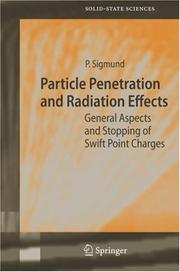 Particle penetration and radiation effectsPeter Sigmund · 2006
 Countdown cityBen H. Winters · 2013
 Particle Accelerators Colliders and the Story of High Energy PhysicsRaghavan Jayakumar · 2011
- 📕A real-time robot arm collision detection systemClifford A. Shaffer · 1990
 Particle Penetration and Radiation Effects Volume 2Peter Sigmund · 2014
 Stopping of heavy ionsPeter Sigmund · 2004
 The theory of coherent radiation by intense electron beamsVyacheslav A. Buts, Andrey N. Lebedev · 2006
Ranked by number of editions on Open Library, a rough measure of how lasting a book is.
🔗 Related topics
- Bounding volume In computer graphics and computational geometry, a bounding volume (or bounding region) for a set of objects is a closed region that completely contains…
- Bounding volume hierarchy A bounding volume hierarchy (BVH) is a tree structure on a set of geometric objects. All geometric objects, which form the leaf nodes of the tree, are…
- Sweep and prune In physical simulations, sweep and prune is a broad phase algorithm used during collision detection to limit the number of pairs of solids that need to…
- Bounding interval hierarchy A bounding interval hierarchy (BIH) is a partitioning data structure similar to that of bounding volume hierarchies or kd-trees. Bounding interval hierarchies…
- Physics engine A physics engine is computer software that provides an approximate simulation of certain physical systems, typically classical dynamics, including rigid…
- Soft-body dynamics Soft-body dynamics is a field of computer graphics that focuses on visually realistic physical simulations of the motion and properties of deformable objects…
- Ray casting Ray casting is the methodological basis for 3D CAD/CAM solid modeling and image rendering. It is essentially the same as ray tracing for computer graphics…
- Gilbert–Johnson–Keerthi distance algorithm The Gilbert–Johnson–Keerthi distance algorithm is a method of determining the minimum distance between two convex sets, first published by Elmer G. Gilbert…