Live briefing
Everything about Class (knowledge representation)
In knowledge representation, a class is a collection of individuals or individuals objects. A class can be defined either by extension, or by intension. According to the type–token distinction, the ontology is divided into individuals, who are real worlds objects, or events, and types, or classes, who are sets of real world objects. Class expressions or definitions gives the properties that the individuals must fulfill to be members of the class. Individuals that fulfill the property are called instances. Wikipedia →
🧭 Start here: a 6-step reading path
- Read the overview: Class (knowledge representation)A 5-minute orientation
- Skim a recent paper: Few-shot class-incremental SAR target recognition via multi-task representation learning network with structural knowledge distillationInfluential work since 2022
- Pick up a classic book: HamletThe most-reprinted book on the subject
- Read the landmark paper: A New Class of Fuzzy Petri Nets for Knowledge Representation and ReasoningCited 29 times
- Go sideways: Ontology componentsA closely related topic
- Go sideways: Metaclass (knowledge representation)A closely related topic
📖 Definitions
No dictionary entry for this exact phrase.
🗂️ The subject at a glance
🏆 Landmark papers (most cited)
A New Class of Fuzzy Petri Nets for Knowledge Representation and Reasoning
Knowledge acquisition and knowledge representation with class: the object-oriented paradigm
SCREAM: Knowledge sharing and compact representation for class incremental learning
KLASSIC: Knowledge Pool-Assisted Forgetting-Resistant Representation Calibration for Few-Shot Class-Incremental Fault Diagnosis
Causal-inspired knowledge tracing via class-conditioned latent representation learning
Integration of Ontology and UML Class-Based Modelling for Knowledge Representation
🆕 Influential since 2022
📚 Books worth reading
 HamletWilliam Shakespeare · 1603
 Computational Linguistics and Intelligent Text ProcessingAlexander Gelbukh · 2003
 Invitation to Computer ScienceG. Michael Schneider, Judith L. Gersting · 1995
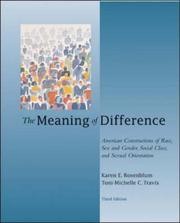 The meaning of differenceKaren E. Rosenblum, Toni-Michelle Travis · 1995
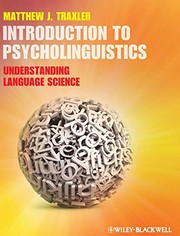 Introduction to psycholinguisticsMatthew J. Traxler · 2011
 Essays in financeGiffen, Robert Sir · 1880
 Critical tax theoryBridget J. Crawford, Anthony C. Infanti · 2009
 History of the World's FairBenjamin Cummings Truman · 1893
Ranked by number of editions on Open Library, a rough measure of how lasting a book is.
🔗 Related topics
- Ontology components Contemporary ontologies share many structural similarities, regardless of the ontology language in which they are expressed. Most ontologies describe individual…
- Metaclass (knowledge representation) In knowledge representation, particularly in the Semantic Web, a metaclass is a class whose instances can themselves be classes. Similar to their role…
- Extensional and intensional definitions In logic, extensional and intensional definitions are two key ways in which the objects, concepts, or referents a term refers to can be defined. They give…
- Subtyping In programming language theory, subtyping (also called subtype polymorphism or inclusion polymorphism) is a form of type polymorphism. A subtype is a datatype…
- Type–token distinction The type–token distinction is the difference between a type of objects (analogous to a class) and the individual tokens of that type (analogous to instances)…
- Definition A definition is a semantic statement of the meaning of a term (a word, phrase, or other set of symbols). Definitions can be classified into two large categories…
- Class (programming) In programming, a class is a syntactic entity structure used to create objects. The capabilities of a class differ between programming languages, but generally…
- Class (philosophy) A class is a collection whose members either fall under a predicate or are classified by a rule. Hence, while a set can be extensionally defined only by…