Everything about Definition
Statement that attaches a meaning to a term

A definition is a semantic statement of the meaning of a term. Definitions can be classified into two large categories: intensional definitions, and extensional definitions. Another important category of definitions is the class of ostensive definitions, which convey the meaning of a term by pointing out examples. A term may have many different senses and multiple meanings, and thus require multiple definitions. Wikipedia →
🧭 Start here: a 6-step reading path
- Read the overview: DefinitionA 5-minute orientation
- Skim a recent paper: A clinical case definition of post-COVID-19 condition by a Delphi consensusInfluential work since 2022
- Pick up a classic book: ΕὐθύφρωνThe most-reprinted book on the subject
- Read the landmark paper: Sarcopenia: revised European consensus on definition and diagnosisCited 12,560 times
- Go sideways: Extensional and intensional definitionsA closely related topic
- Go sideways: Circular definitionA closely related topic
📖 Definitions
Noun The product of defining; a statement expressing the essential nature of something; a formulation. A statement of the meaning of a word, phrase, sign, or symbol; especially, a dictionary definition.
Noun A statement of the meaning of a word, phrase, sign, or symbol; especially, a dictionary definition.
Noun A clear instance conforming to the dictionary or textbook definition.
Noun A statement that establishes the referent of a term or notation.
🏆 Landmark papers (most cited)
Sarcopenia: revised European consensus on definition and diagnosis
Establishing a standard definition for child overweight and obesity worldwide: international survey
Sarcopenia: European consensus on definition and diagnosis
NIA‐AA Research Framework: Toward a biological definition of Alzheimer's disease
Definition, diagnosis and classification of diabetes mellitus and its complications. Part 1: diagnosis and classification of diabetes mellitus. Provisional report of a WHO Consultation
Social Network Sites: Definition, History, and Scholarship
The metabolic syndrome—a new worldwide definition
Shifting the genomic gold standard for the prokaryotic species definition
🆕 Influential since 2022
A clinical case definition of post-COVID-19 condition by a Delphi consensus
Definition and diagnostic criteria of clinical obesity
International League Against Epilepsy classification and definition of epilepsy syndromes with onset in childhood: Position paper by the ILAE Task Force on Nosology and Definitions
Definition and Diagnostic Criteria for Sarcopenic Obesity: ESPEN and EASO Consensus Statement
ESICM guidelines on acute respiratory distress syndrome: definition, phenotyping and respiratory support strategies
📚 Books worth reading
 ΕὐθύφρωνPlato · 1880
 A Hole Is to DigRuth Krauss · 1952
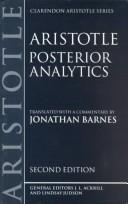 Posterior analyticsAristotle · 1901
 Star RangersAndre Norton · 1953
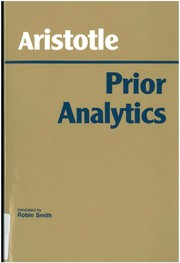 Prior AnalyticsAristotle · 1964
 LiteraturePeter Widdowson · 1999
- 📕Special Integrals of Gradshteyn and RyzhikVictor H. Moll · 2014
 HDTV and the transition to digital broadcastingPhilip J. Cianci · 2007
Ranked by number of editions on Open Library, a rough measure of how lasting a book is.
🔗 Related topics
- Extensional and intensional definitions In logic, extensional and intensional definitions are two key ways in which the objects, concepts, or referents a term refers to can be defined. They give…
- Circular definition A circular definition is a type of definition that uses the term(s) being defined as part of the description or assumes that the term(s) being described…
- Ostensive definition An ostensive definition conveys the meaning of a term by pointing out examples. This type of definition is often used where the term is difficult to define…
- Intension In any of several fields of study that treat the use of signs—for example, in linguistics, logic, mathematics, semantics, semiotics, and philosophy of…
- Fallacies of definition Fallacies of definition are the various ways in which definitions can fail to explain terms. The phrase is used to suggest an analogy with an informal…
- Haecceity Haecceity (/hɛkˈsiːɪti, hiːk-/; from the Latin haecceitas, 'thisness') is a term from medieval scholastic philosophy, coined by followers of Duns Scotus…
- Topics (Aristotle) The Topics (Ancient Greek: Τοπικά; Latin: Topica) is the name given to one of Aristotle's six works on logic collectively known as the Organon. In Andronicus…
- Private language argument The private language argument argues that the idea of a "private language"—i.e., a language that is understandable by only a single individual—is incoherent…