Live briefing

Everything about C (programming language)
General-purpose programming language
C is a general-purpose programming language created in 1972 by Dennis Ritchie. By design, C gives programmers relatively direct access to the features of typical CPU architectures, customized for the target instruction set. It has been and continues to be used to implement operating systems, device drivers, and protocol stacks, though its use in application software is decreasing. C is used on computers ranging from supercomputers to microcontrollers and embedded systems. Wikipedia →
🧭 Start here: a 6-step reading path
- Read the overview: C (programming language)A 5-minute orientation
- Skim a recent paper: Prompting Is Programming: A Query Language for Large Language ModelsInfluential work since 2022
- Pick up a classic book: The C Programming LanguageThe most-reprinted book on the subject
- Read the landmark paper: Stan : A Probabilistic Programming LanguageCited 6,170 times
- Go sideways: C dynamic memory allocationA closely related topic
- Go sideways: C syntaxA closely related topic
📖 Definitions
No dictionary entry for this exact phrase.
🗂️ The subject at a glance
🏆 Landmark papers (most cited)
Stan : A Probabilistic Programming Language
ELIZA—A Computer Program For the Study of Natural Language Communication Between Man and Machine
The programming language oberon
A programmable programming language
CRN++: Molecular programming language
Incremental programming language development
The Y programming language
The SNOBOL3 Programming Language
🆕 Influential since 2022
📚 Books worth reading
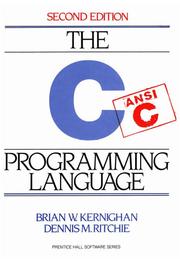 The C Programming LanguageBrian W. Kernighan, Dennis MacAlistair Ritchie · 1978
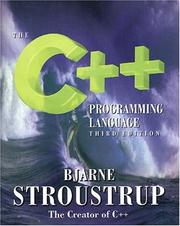 The C++ programming languageBjarne Stroustrup · 1986
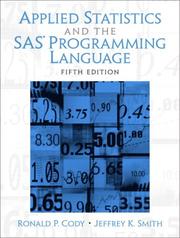 Applied statistics and the SAS programming languageRonald P. Cody · 1985
 The C# programming languageAnders Hejlsberg, Scott Wiltamuth · 2004
 The C++ programming languageBjarne Stroustrup · 1999
 The C answer bookClovis L. Tondo, Scott E. Gimpel · 1985
 Programming LanguagesAppleby · 1991
 The essentials of C programming languageErnest C. Ackermann · 1989
Ranked by number of editions on Open Library, a rough measure of how lasting a book is.
🔗 Related topics
- C dynamic memory allocation C dynamic memory allocation refers to performing manual memory management for dynamic memory allocation in the C programming language via a group of functions…
- C syntax C syntax is the form that text must have in order to be C programming language code. The language syntax rules are designed to allow for code that is terse…
- C data types In the C programming language, data types constitute the semantics and characteristics of storage of data elements. They are expressed in the language…
- Compatibility of C and C++ The C and C++ programming languages are closely related but have many significant differences. C++ began as a fork of an early, pre-standardized C, called…
- Sizeof sizeof is a unary operator in the C and C++ programming languages that evaluates to the storage size of an expression or a data type, measured in units…
- Pointer (computer programming) I do consider assignment statements and pointer variables to be among computer science's "most valuable treasures." — Donald Knuth, Structured Programming…
- Variable-length array In computer programming, a variable-length array (VLA), also called variable-sized or runtime-sized, is an array data structure whose length is determined…
- C99 C99 (C9X during its development, formally ISO/IEC 9899:1999) is a past version of the C programming language open standard. It extends the previous version…