Live briefing
Everything about C dynamic memory allocation
Dynamic memory management in the C programming language
C dynamic memory allocation refers to performing manual memory management for dynamic memory allocation in the C programming language via a group of functions in the C standard library, mainly malloc, realloc, calloc, aligned_alloc and free. Wikipedia →
🧭 Start here: a 6-step reading path
- Read the overview: C dynamic memory allocationA 5-minute orientation
- Skim a recent paper: A Novel Temporal Dynamic Wavelength Bandwidth Allocation Based on Long-Short-Term-Memory in NG-EPONInfluential work since 2022
- Pick up a classic book: Modern Operating SystemsThe most-reprinted book on the subject
- Read the landmark paper: Dynamic allocation for scratch-pad memory using compile-time decisionsCited 173 times
- Go sideways: Stack-based memory allocationA closely related topic
- Go sideways: New and delete (C++)A closely related topic
📖 Definitions
No dictionary entry for this exact phrase.
🏆 Landmark papers (most cited)
Dynamic allocation for scratch-pad memory using compile-time decisions
A dynamic processor allocation policy for multiprogrammed shared-memory multiprocessors
A class of dynamic memory allocation algorithms
Scalable lock-free dynamic memory allocation
Dynamic memory allocation in computer simulation
Dynamic Memory Bandwidth Allocation for Real-Time GPU-Based SoC Platforms
Dynamic memory optimization using pool allocation and prefetching
Memory fragmentation in buddy methods for dynamic storage allocation
🆕 Influential since 2022
A Novel Temporal Dynamic Wavelength Bandwidth Allocation Based on Long-Short-Term-Memory in NG-EPON
A High-Performance Sketch With Dynamic Memory Allocation for Priority-Oriented Data Stream Processing
Memory Allocation Strategy in Edge Programmable Logic Controllers Based on Dynamic Programming and Fixed-Size Allocation
T-CAT: Dynamic Cache Allocation for Tiered Memory Systems With Memory Interleaving
Dynamic resource allocation in spatial working memory during full and partial report tasks
📚 Books worth reading
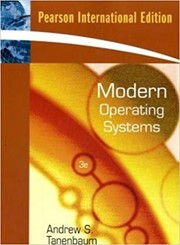 Modern Operating SystemsAndrew S. Tanenbaum, Herbert Bos · 1992
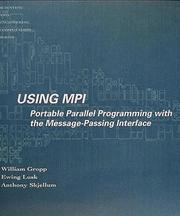 Using MPIWilliam Gropp, Ewing Lusk · 1994
 The Conspirators HierarchyJohn Coleman · 1992
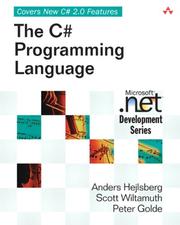 The C# programming languageAnders Hejlsberg, Scott Wiltamuth · 2004
 System softwareLeland L. Beck · 1985
 Software EssentialsAdair Dingle · 2014
 Digital planetGeorge Beekman, Ben Beekman · 2011
 Why programs failAndreas Zeller · 2005
Ranked by number of editions on Open Library, a rough measure of how lasting a book is.
🔗 Related topics
- Stack-based memory allocation Stacks in computing architectures are regions of memory where data is added or removed in a last-in-first-out (LIFO) manner. In most modern computer systems…
- New and delete (C++) In the C++ programming language, new and delete are a pair of language constructs that perform dynamic memory allocation, object construction and object…
- Data segment In computing, a data segment (often denoted .data) is a portion of an object file or the corresponding address space of a program that contains initialized…
- Sbrk brk and sbrk are basic memory management system calls used in Unix and Unix-like operating systems to control the amount of memory allocated to the heap…
- C (programming language) C is a general-purpose programming language created in 1972 by Dennis Ritchie. By design, C gives programmers relatively direct access to the features…
- Sizeof sizeof is a unary operator in the C and C++ programming languages that evaluates to the storage size of an expression or a data type, measured in units…
- Pointer (computer programming) I do consider assignment statements and pointer variables to be among computer science's "most valuable treasures." — Donald Knuth, Structured Programming…
- Boehm garbage collector The Boehm–Demers–Weiser garbage collector, often simply known as the Boehm GC or Boehm collector, is a conservative garbage collector for C and C++ developed…