Live briefing
Everything about Variable-length array
Type of data structure
In computer programming, a variable-length array (VLA), also called variable-sized or runtime-sized, is an array data structure whose length is determined at runtime, instead of at compile time. In the language C, the VLA is said to have a variably modified data type that depends on a value. Wikipedia →
🧭 Start here: a 6-step reading path
- Read the overview: Variable-length arrayA 5-minute orientation
- Skim a recent paper: VLA-SMILES: Variable-Length-Array SMILES Descriptors in Neural Network-Based QSAR ModelingInfluential work since 2022
- Pick up a classic book: Java software solutionsThe most-reprinted book on the subject
- Read the landmark paper: Fabrication of a focal length variable microlens array based on a nematic liquid crystalCited 77 times
- Go sideways: Comparison of programming languages (array)A closely related topic
- Go sideways: Stack-based memory allocationA closely related topic
📖 Definitions
Noun An array whose length is determined by a variable at run time.
🗂️ The subject at a glance
🏆 Landmark papers (most cited)
Fabrication of a focal length variable microlens array based on a nematic liquid crystal
Design and fabrication of a micro Alvarez lens array with a variable focal length
Ultrasonic optical lens array with variable focal length and pitch
Low Sidelobe Coupled Broadband Microstrip Array Antenna With Non-Uniform Spacing and Variable Groove Length
Suffix array for multi-pattern matching with variable length wildcards
Field programmable gate array implementation frameworks of a variable-length pseudorandom pattern generator
A Focused Circular Array with Variable Focal Length
Lorenz theory of symmetric relative concentration and similarity, incorporating variable array length
🆕 Influential since 2022
📚 Books worth reading
 Java software solutionsLewis, John, John E. Lewis Ph. D. · 1997
 C How to ProgramPaul J. Deitel, Harvey M. Deitel · 2007
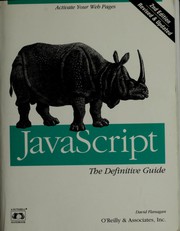 JavaScriptDavid Flanagan · 1996
 Starting Out with JavaTony Gaddis · 2004
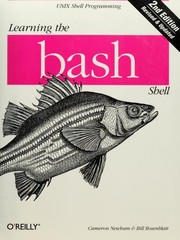 Learning the bash ShellCameron Newham, Bill Rosenblatt · 1995
 Fundamentals of data structures in CEllis Horowitz · 1993
 An introduction to data structures with applicationsJean-Paul Tremblay, Paul Gordon Sorenson · 1976
 Data structures and algorithms in JavaAdam Drozdek · 2001
Ranked by number of editions on Open Library, a rough measure of how lasting a book is.
🔗 Related topics
- Comparison of programming languages (array) This comparison of programming languages (array) compares the features of array data structures or matrix processing for various computer programming languages…
- Stack-based memory allocation Stacks in computing architectures are regions of memory where data is added or removed in a last-in-first-out (LIFO) manner. In most modern computer systems…
- Comparison of programming languages (basic instructions) This article compares a large number of programming languages by tabulating their data types, their expression, statement, and declaration syntax, and…
- C dynamic memory allocation C dynamic memory allocation refers to performing manual memory management for dynamic memory allocation in the C programming language via a group of functions…
- C (programming language) C is a general-purpose programming language created in 1972 by Dennis Ritchie. By design, C gives programmers relatively direct access to the features…
- Compatibility of C and C++ The C and C++ programming languages are closely related but have many significant differences. C++ began as a fork of an early, pre-standardized C, called…
- C data types In the C programming language, data types constitute the semantics and characteristics of storage of data elements. They are expressed in the language…
- Pointer (computer programming) I do consider assignment statements and pointer variables to be among computer science's "most valuable treasures." — Donald Knuth, Structured Programming…