Everything about Bump mapping
Texturing technique for bumps/wrinkles in computer graphics
Bump mapping is a texture mapping technique in computer graphics for simulating bumps and wrinkles on the surface of an object. This is achieved by perturbing the surface normals of the object and using the perturbed normal during lighting calculations. The result is an apparently bumpy surface rather than a smooth surface, although the surface of the underlying object is not changed. Bump mapping was introduced by James Blinn in 1978. Wikipedia →
🧭 Start here: a 6-step reading path
- Read the overview: Bump mappingA 5-minute orientation
- Skim a recent paper: The extensions of revolution-bump mappingInfluential work since 2022
- Pick up a classic book: The Book of ShadersThe most-reprinted book on the subject
- Read the landmark paper: Horizon mapping: shadows for bump-mapped surfacesCited 79 times
- Go sideways: Per-pixel lightingA closely related topic
- Go sideways: Normal mappingA closely related topic
📖 Definitions
Noun A technique where a perturbation to the surface normal of the object being rendered is applied to each pixel, based on a texture map, prior to calculating the illumination, so as to produce a richer, more detailed surface representation.
🗂️ The subject at a glance
🏆 Landmark papers (most cited)
Horizon mapping: shadows for bump-mapped surfaces
Viewpoint-dependent lighting on polygonal holograms using bump mapping
Mapping Dust Attenuation and the 2175 Å Bump at Kiloparsec Scales in Nearby Galaxies
Bump Mapping Unparametrized Surfaces on the GPU
Hardware-supported bump mapping
A fast and efficient bump mapping algorithm by angular perturbation
Least distorted bump mapping onto surface patches
Efficient anti-aliased bump mapping
🆕 Influential since 2022
The extensions of revolution-bump mapping
High-density electroanatomic mapping of atriofascicular pathways using multipolar mapping catheters can identify oblique pathways and avoid mechanical bump termination
Classification of bump mapping methods for high realistic rendering (UKR)
Revolution-bump mapping with texture function adjustment according to the geometry of the revolved object
First experimental isotopic mapping of the fission “γ-bump” and its connection to the Pygmy dipole resonance
📚 Books worth reading
 The Book of ShadersPatricio Gonzalez Vivo · 2015
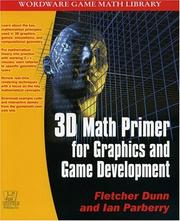 3D math primer for graphics and game developmentFletcher Dunn · 2002
 The Elements of Statistical LearningTrevor Hastie, Robert Tibshirani · 2001
 Winsor McCayWinsor McCay · 2003
 The Renaissance and the ReformationHenry S. Lucas · 1934
 Essential Virtual Reality fastJohn Vince · 1998
 Nine Bar BluesSheree Renée Thomas · 2020
 The Old farmer's almanacRobert Bailey Thomas · 1999
Ranked by number of editions on Open Library, a rough measure of how lasting a book is.
🔗 Related topics
- Per-pixel lighting In computer graphics, per-pixel lighting refers to any technique for lighting an image or scene that calculates illumination for each pixel on a rendered…
- Normal mapping In 3D computer graphics, normal mapping, or Dot3 bump mapping, is a texture mapping technique used for faking the lighting of bumps and dents – an implementatio…
- Computer graphics lighting Computer graphics lighting is the collection of techniques used to simulate light in computer graphics scenes. While lighting techniques offer flexibility…
- Heightmap In computer graphics, a heightmap or heightfield is a raster image used mainly as Discrete Global Grid in secondary elevation modeling. Each pixel stores…
- Glossary of computer graphics This is a glossary of terms relating to computer graphics. For more general computer hardware terms, see glossary of computer hardware terms. Contents…
- 2.5D 2.5D (basic pronunciation two-and-a-half-dimensional and two-point-five-d) perspective refers to gameplay or movement in a video game or virtual reality…
- Reflection mapping In computer graphics, reflection mapping or environment mapping is an efficient image-based lighting technique for approximating the appearance of a reflective…
- Displacement mapping Displacement mapping is an alternative computer graphics technique in contrast to bump, normal, and parallax mapping, using a texture or height map to…