Everything about Asynchronous Transfer Mode
Digital telecommunications protocol for voice, video, and data

Asynchronous Transfer Mode (ATM) is a telecommunications standard defined by the American National Standards Institute and International Telecommunication Union Telecommunication Standardization Sector for digital transmission of multiple types of traffic. ATM was developed to meet the needs of the Broadband Integrated Services Digital Network as defined in the late 1980s, and designed to integrate telecommunication networks. It can handle both traditional high-throughput data traffic and real-time, low-latency content such as telephony (voice) and video. ATM is a cell switching technology, providing functionality that combines features of circuit switching and packet switching networks by using asynchronous time-division multiplexing. ATM was seen in the 1990s as a competitor to Ethernet and networks carrying IP traffic, as it was faster and, unlike Ethernet, designed with quality-of-service in mind, but it fell out of favor once Ethernet reached speeds of 1 gigabit per second. Wikipedia →
🧭 Start here: a 6-step reading path
- Read the overview: Asynchronous Transfer ModeA 5-minute orientation
- Skim a recent paper: Application of ATM Asynchronous Transfer Mode Intellectualization in Civil Aviation SystemInfluential work since 2022
- Pick up a classic book: ATMThe most-reprinted book on the subject
- Read the landmark paper: Broadband ISDN and asynchronous transfer mode (ATM)Cited 224 times
- Go sideways: ATM adaptation layerA closely related topic
- Go sideways: ATM Adaptation Layer 5A closely related topic
📖 Definitions
Noun A broadband voice and data technology with quality (class) of service QoS transmission for sending and receiving voice, data, and multimedia information over a fiber-optic network.
🗂️ The subject at a glance
🏆 Landmark papers (most cited)
Broadband ISDN and asynchronous transfer mode (ATM)
The Asynchronous Transfer Mode: a tutorial
A variable bit rate video codec for asynchronous transfer mode networks
Hardware implementation of fair queuing algorithms for asynchronous transfer mode networks
ATMR: Asynchronous transfer mode ring protocol
Asynchronous transfer mode (ATM) operation via satellite: Issues, challenges and resolutions
Asynchronous transfer mode technology for radiologic image communication.
Traffic control in asynchronous transfer mode
🆕 Influential since 2022
📚 Books worth reading
 ATMUyless Black · 1995
 A Textbook on ATM TelecommunicationsP. S. Neelakanta · 2000
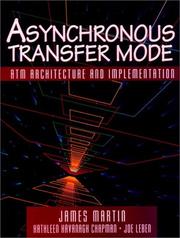 Asynchronous transfer modeJames Martin · 1996
- 📕MPEG-2 over asynchronous transfer mode (ATM) over satellite quality of service (QoS) experimentsWilliam D. Ivancic · 1998
 ATM networksDemetres D. Kouvatsos · 1996
 ISDN and Broadvand ISDN with Frame Relay and ATMWilliam Stallings · 1995
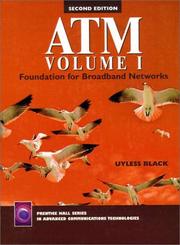 ATM Volume IUyless Black · 1995
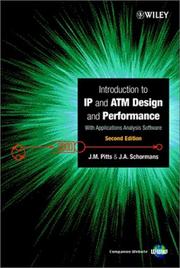 Introduction to IP and ATM design and performanceJ. M. Pitts · 2000
Ranked by number of editions on Open Library, a rough measure of how lasting a book is.
🔗 Related topics
- ATM adaptation layer The use of Asynchronous Transfer Mode (ATM) technology and services creates the need for an adaptation layer in order to support information transfer protocols…
- ATM Adaptation Layer 5 ATM Adaptation Layer 5 (AAL5) is an ATM adaptation layer used to send variable-length packets up to 65,535 octets in size across an Asynchronous Transfer…
- Connection-oriented communication In telecommunications and computer networking, connection-oriented communication is a communication protocol where a communication session or a semi-permanent…
- UPC and NPC Usage Parameter Control (UPC) and Network Parameter Control (NPC) are functions that may be performed in a computer network. UPC may be performed at the…
- ATM Adaptation Layer 2 ATM Adaptation Layer 2 (AAL2) is an Asynchronous Transfer Mode (ATM) adaptation layer, used primarily in telecommunications; for example, it is used for…
- Virtual circuit A virtual circuit (VC) is a means of transporting data over a data network, based on packet switching and in which a connection is first established across…
- Measuring network throughput Throughput of a network can be measured using various tools available on different platforms. This page explains the theory behind what these tools set…
- Generic cell rate algorithm The generic cell rate algorithm (GCRA) is a leaky bucket-type scheduling algorithm for the network scheduler that is used in Asynchronous Transfer Mode…