Live briefing
Everything about Work-based learning
Educational strategy
Work-based learning (WBL) refers to forms of learning that occur through participation in work and contribution, across formal, non-formal and informal contexts. In education policy, WBL is linked to national systems for the recognition and validation of learning outside formal programmes; in higher education and professional practice, it is also discussed as an emergent transdisciplinary mode of study. Wikipedia →
🧭 Start here: a 6-step reading path
- Read the overview: Work-based learningA 5-minute orientation
- Skim a recent paper: Learning by… Knowledge and skills acquisition through work-based learning and researchInfluential work since 2022
- Pick up a classic book: Steps to IndependenceThe most-reprinted book on the subject
- Read the landmark paper: A Model of Work-Based LearningCited 290 times
- Go sideways: Nonformal learningA closely related topic
- Go sideways: Online credentials for learningA closely related topic
📖 Definitions
No dictionary entry for this exact phrase.
🗂️ The subject at a glance
🏆 Landmark papers (most cited)
A Model of Work-Based Learning
Work‐based learning in practice
Towards a pedagogy of work‐based learning: perceptions of work‐based learning in foundation degrees
Work-based learning
Characterising work-based learning as a triadic learning endeavour
Work-based Learning, Action Learning and the Virtual Paradigm
Professionalism, ethics and work‐based learning
Towards Work-Based Mobile Learning
🆕 Influential since 2022
Learning by… Knowledge and skills acquisition through work-based learning and research
Development of Employability Skills through Work-Based Learning
The value of informal learning within work‐based learning: The economic benefits of WBL
Toward sustainability: a typology for non-placement work-based learning
Online work-based learning: A systematic literature review
📚 Books worth reading
 Steps to IndependenceBruce L. Baker, Alan J., Ph.D. Brightman · 1976
 Creating Engaging DiscussionsJennifer H. Herman, Linda B. Nilson · 2018
 Collaborating onlineRena M. Palloff, Keith Pratt · 2004
 Step-upSamir Mehta MD, Adam Mirarchi · 2001
 Supervising Practices for Postgraduate Research in Art, Architecture and DesignBrent Allpress, Robyn Barnacle · 2012
 Problem-based learning in health and social careTeena Clouston, Lyn Westcott · 2010
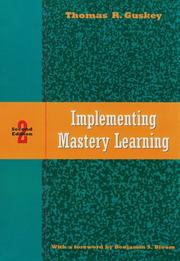 Implementing mastery learningThomas R. Guskey · 1985
 Interactive Learning in the Higher Education ClassroomHarvey Charles Foyle · 1995
Ranked by number of editions on Open Library, a rough measure of how lasting a book is.
🔗 Related topics
- Nonformal learning Non-formal learning includes various structured learning situations which do not either have the level of curriculum, institutionalization, accreditation…
- Online credentials for learning Online credentials for learning are digital credentials that are offered in place of traditional paper credentials for a skill or educational achievement…
- UNESCO Institute for Lifelong Learning 53°34′07″N 9°58′36″E / 53.5685666°N 9.9767715°E / 53.5685666; 9.9767715 The UNESCO Institute for Lifelong Learning (UIL), formerly UNESCO Institute…
- Work-integrated learning Work-integrated learning (WIL) provides students with the opportunity to apply their learning from academic studies to relevant experiences and reciprocate…
- Education Education is the transmission of knowledge and skills and the development of character traits. Formal education happens in a complex institutional framework…
- Adult education Adult education is when adults gain new attitudes, knowledge, skills, or values through systematic educating activities. It includes any form of learning…
- VET-Bib VET-Bib is a bibliographic database covering European professional education literature maintained by the European Centre for the Development of Professional…
- Recognition of prior learning Recognition of prior learning (RPL), prior learning assessment (PLA), or prior learning assessment and recognition (PLAR) describes a process used by regulatory…