Everything about Design
Plan for the construction of an object or system

A design is the concept or proposal for an object, process, or system. The word design refers to something that is or has been intentionally created by a thinking agent, and is sometimes used to refer to the inherent nature of something – its design. The verb to design expresses the process of developing a design. In some cases, the direct construction of an object without an explicit prior plan may also be considered to be a design, such as in arts and crafts. A design is expected to have a purpose within a specific context, typically aiming to satisfy certain goals and constraints while taking into account aesthetic, functional and experiential considerations. Traditional examples of designs are architectural and engineering drawings, circuit diagrams, sewing patterns, and less tangible artefacts such as business process models. Wikipedia →
🧭 Start here: a 6-step reading path
- Read the overview: DesignA 5-minute orientation
- Skim a recent paper: Refracting RIS-Aided Hybrid Satellite-Terrestrial Relay Networks: Joint Beamforming Design and OptimizationInfluential work since 2022
- Pick up a classic book: The grammar of ornamentThe most-reprinted book on the subject
- Read the landmark paper: Design and synthesis of an exceptionally stable and highly porous metal-organic frameworkCited 8,055 times
- Go sideways: Design methodsA closely related topic
- Go sideways: User experience designA closely related topic
📖 Definitions
No dictionary entry for this exact phrase.
🗂️ The subject at a glance
🏆 Landmark papers (most cited)
Design and synthesis of an exceptionally stable and highly porous metal-organic framework
Motivation through the design of work: test of a theory
Modular Chemistry: Secondary Building Units as a Basis for the Design of Highly Porous and Robust Metal−Organic Carboxylate Frameworks
Covalent Organic Frameworks: Design, Synthesis, and Functions
Covalent organic frameworks (COFs): from design to applications
🆕 Influential since 2022
Refracting RIS-Aided Hybrid Satellite-Terrestrial Relay Networks: Joint Beamforming Design and Optimization
How to design bibliometric research: an overview and a framework proposal
Design Rules of Hydrogen-Bonded Organic Frameworks with High Chemical and Thermal Stabilities
Work Function‐Guided Electrocatalyst Design
Playful work design: Conceptualization, measurement, and validity
📚 Books worth reading
 The grammar of ornamentOwen Jones · 1856
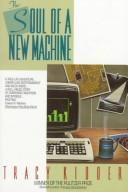 The Soul of a New MachineTracy Kidder · 1981
 Quattro libri dell'architetturaTETRIS · 1570
 The professional practice of architectural working drawingsOsamu A. Wakita · 1984
 HackersSteven Levy · 1984
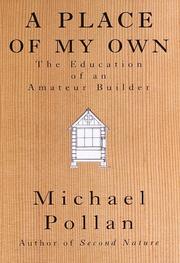 A Place of My OwnMichael Pollan · 1997
 Modern automotive technologyDuffy, James E., James E. Duffy · 1993
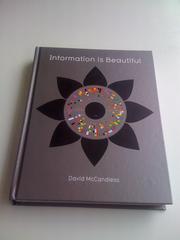 Information is BeautifulDavid McCandless · 2010
Ranked by number of editions on Open Library, a rough measure of how lasting a book is.
🔗 Related topics
- Design methods Design methods are procedures, techniques, aids, or tools for designing. They offer a number of different kinds of activities that a designer might use…
- User experience design User experience design (UX design, UXD, UED, or XD), upon which is the centralized requirements for "User Experience Design Research" (also known as UX…
- Design thinking Design thinking refers to the set of cognitive, strategic and practical procedures used by designers in the process of designing, and to the body of knowledge…
- Service design Service design is the activity of planning and arranging people, infrastructure, communication, and material components of a service in order to improve…
- Ecological design Ecological design or ecodesign is an approach to designing products and services that gives special consideration to the environmental impacts of a product…
- User-centered design User-centered design (UCD) or user-driven development (UDD) is a framework of processes in which usability goals, user characteristics, environment, tasks…
- Systems design The basic study of system design is the understanding of component parts and their subsequent interaction with one another. Systems design has appeared…
- Design science Design science refers to a scientific, i.e. rational and systematic, approach to designing. An early concept of design science was introduced in 1957 by…