Live briefing
Everything about Web Messaging
HTML5 API
Web Messaging, or cross-document messaging, is an API introduced in the WHATWG HTML5 draft specification, allowing documents to communicate with one another across different origins, or source domains while rendered in a web browser. Prior to HTML5, web browsers disallowed cross-site scripting, to protect against security attacks. This practice barred communication between non-hostile pages as well, making document interaction of any kind difficult. Cross-document messaging allows scripts to interact across these boundaries, while providing a rudimentary level of security. Wikipedia →
🧭 Start here: a 6-step reading path
- Read the overview: Web MessagingA 5-minute orientation
- Skim a recent paper: Web 2.0 technologies and translator training: assessing trainees’ use of instant messaging as a collaborative tool in accomplishing translation tasksInfluential work since 2022
- Pick up a classic book: The Internet for DummiesThe most-reprinted book on the subject
- Read the landmark paper: Web Messaging: A New Tool for Patient-Physician CommunicationCited 142 times
- Go sideways: Web workerA closely related topic
- Go sideways: Same-origin policyA closely related topic
📖 Definitions
No dictionary entry for this exact phrase.
🗂️ The subject at a glance
🏆 Landmark papers (most cited)
Web Messaging: A New Tool for Patient-Physician Communication
A pilot test of a tailored mobile and web-based diabetes messaging system for adolescents
Patient-physician web messaging
The impact of patient–physician web messaging on healthcare service provision
Web Usage Data as a Means of Evaluating Public Health Messaging and Outreach
On the performance of web services, google cloud messaging and firebase cloud messaging
Building messaging substrates for Web and Grid applications
Optimizing Web Service messaging performance in mobile computing
🆕 Influential since 2022
Web 2.0 technologies and translator training: assessing trainees’ use of instant messaging as a collaborative tool in accomplishing translation tasks
E2EE Web Messaging Application Using Cryptography Techniques
A conceptual analysis of the ethicality of Web-based messaging on the COVID-19 pandemic
Web messaging among young people in online services: A descriptive mixed-methods study
Collaboration of Progressive Web App (PWA) And Firebase Cloud Messaging (FCM) for Optimal Performance Mailing Software
📚 Books worth reading
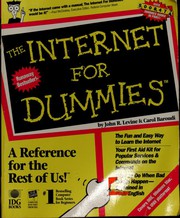 The Internet for DummiesJohn R. Levine, Carol Baroudi · 1993
 The Twitter BookTim O'Reilly, Sarah Milstein · 2009
 Twitter Tips, Tricks, and TweetsPaul McFedries · 2009
- 📕Web 2.0 & librariesMichael Stephens · 2006
 Grace notesCharlotte Vale Allen · 2002
 Data Communications Networking (McGraw-Hill Forouzan Networking)Behrouz A. Forouzan · 2006
 Twitter APIKevin Makice · 2009
 Spam and scamsEric Minton · 2013
Ranked by number of editions on Open Library, a rough measure of how lasting a book is.
🔗 Related topics
- Web worker A web worker, as defined by the World Wide Web Consortium (W3C) and the Web Hypertext Application Technology Working Group (WHATWG), is a JavaScript script…
- Same-origin policy In computing, the same-origin policy (SOP) is a concept in the web application security model. Under the policy, a web browser permits scripts contained…
- Comet (programming) Comet is a web application model in which a long-held HTTPS request allows a web server to push data to a browser, without the browser explicitly requesting…
- Web storage Web storage, formerly known as DOM storage (Document Object Model storage), is a standard JavaScript API provided by web browsers. It enables websites…
- HTML5 HTML5 (Hypertext Markup Language 5) is a markup language used for structuring and presenting hypertext documents on the World Wide Web. It was the fifth…
- WHATWG The Web Hypertext Application Technology Working Group (WHATWG) was founded by representatives from Apple Inc., the Mozilla Foundation and Opera Software…
- Push technology Push technology, also known as server push, is a communication method where the communication is initiated by a server rather than a client. This approach…
- Document Object Model The Document Object Model (DOM) is a cross-platform and language-independent API that treats an HTML or XML document as a tree structure wherein each node…