Live briefing

Everything about Document Object Model
Computer document convention
The Document Object Model (DOM) is a cross-platform and language-independent API that treats an HTML or XML document as a tree structure wherein each node is an object representing a part of the document. The DOM represents a document with a logical tree. Each branch of the tree ends in a node, and each node contains objects. DOM methods allow programmatic access to the tree; with them one can change the structure, style or content of a document. Nodes can have event handlers attached to them. Once an event is triggered, the event handlers get executed. Wikipedia →
🧭 Start here: a 6-step reading path
- Read the overview: Document Object ModelA 5-minute orientation
- Skim a recent paper: Object-oriented Design based Comprehensive Experimental Development of Document Object ModelInfluential work since 2022
- Pick up a classic book: High Performance JavaScriptThe most-reprinted book on the subject
- Read the landmark paper: Augmented process model for e-tendering: Towards integrating object models with document management systemsCited 45 times
- Go sideways: Node (computer science)A closely related topic
- Go sideways: Cross-browser compatibilityA closely related topic
📖 Definitions
No dictionary entry for this exact phrase.
🗂️ The subject at a glance
🏆 Landmark papers (most cited)
Augmented process model for e-tendering: Towards integrating object models with document management systems
WISDOM: Web intrapage informative structure mining based on document object model
A Model-Driven Approach to Generate Schemas for Object-Document Mappers
Bridging WebML to model-driven engineering: from document type definitions to meta object facility
Object-oriented XML document meta-model for B2B collaborations
Remapping the Document Object Model using Geometric and Hierarchical Data Structures for Efficient Eye Control
Dynamic document object model formation technique for corporate website protection against automatic coping of information
Ekstraksi Data pada Tabel dari Halaman Web Menggunakan Pohon Document Object Model
🆕 Influential since 2022
Object-oriented Design based Comprehensive Experimental Development of Document Object Model
Creating an Interactive Site Using the Document Object Model
Mathematical Model and Algorithm for Evaluating Web Document Object Similarity
Performance Investigation of Software Agents in Artificial Intelligence and Document Object Model Domain
The traditional core of DOM (Document Object Model) and its formal representation in fDOM
📚 Books worth reading
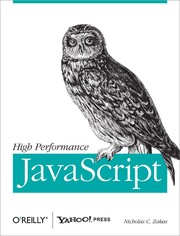 High Performance JavaScriptNicholas C. Zakas · 2010
 DOM scriptingJeremy Keith · 2010
- 📕DOM EnlightenmentCody Lindley · 2013
- 📕Instant Zepto. jsIan Pointer · 2013
- 📕Beginning JavaScript with DOM scripting and AjaxChristian Heilmann · 2006
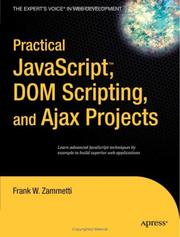 Practical JavaScript, DOM Scripting and Ajax ProjectsFrank Zammetti · 2007
 Accelerated DOM scripting with Ajax, APIs, and librariesJonathan Snook · 2007
 AdvancED DOM ScriptingJeffrey Sambells · 2007
Ranked by number of editions on Open Library, a rough measure of how lasting a book is.
🔗 Related topics
- Node (computer science) A node is a basic unit of a data structure, such as a linked list or tree data structure. Nodes contain data and also may link to other nodes. Links between…
- Cross-browser compatibility Cross-browser compatibility is the ability of a website or web application to function across different browsers and degrade gracefully when browser features…
- DOM event DOM (Document Object Model) Events are a signal that something has occurred, or is occurring, and can be triggered by user interactions or by the browser…
- HTML5 HTML5 (Hypertext Markup Language 5) is a markup language used for structuring and presenting hypertext documents on the World Wide Web. It was the fifth…
- Shadow DOM Shadow DOM is a browser feature that allows websites to define self-contained HTML elements on the website. These self-contained elements, called shadow…
- Web standards Web standards are the formal, non-proprietary standards and other technical specifications that define and describe aspects of the World Wide Web. In recent…
- HTML element An HTML element is a type of HTML (HyperText Markup Language) document component, one of several types of HTML nodes (some common node types include document…
- XPath XPath (XML Path Language) is an expression language designed to support the query or transformation of XML documents. It was defined by the World Wide…