Live briefing
Everything about Visual learning
Learning style
Visual learning is one of the learning styles in which information is primarily received and understood by a learner when presented in a visual format. Visual learners can utilize graphs, charts, maps, diagrams, and other forms of visual stimulation to effectively interpret information. It is best to treat a learning style as a matter of individual preference, rather than an educational need. Students generally learn best from mixed modality presentations, such as combining a spoken lecture with a visual aid. Wikipedia →
🧭 Start here: a 6-step reading path
- Read the overview: Visual learningA 5-minute orientation
- Skim a recent paper: Active Learning for Deep Visual TrackingInfluential work since 2022
- Pick up a classic book: Visual anatomy & physiologyThe most-reprinted book on the subject
- Read the landmark paper: Image Representations for Visual LearningCited 206 times
- Go sideways: Kinesthetic learningA closely related topic
- Go sideways: Troland Research AwardsA closely related topic
📖 Definitions
No dictionary entry for this exact phrase.
🏆 Landmark papers (most cited)
Image Representations for Visual Learning
Learning to Link Visual Contours
Sound Facilitates Visual Learning
Verbal and visual learning styles
Visual perceptual learning
Multidimensional visual statistical learning.
Learning Visual Semantic Relationships for Efficient Visual Retrieval
Mutual Contrastive Learning for Visual Representation Learning
🆕 Influential since 2022
📚 Books worth reading
 Visual anatomy & physiologyFrederic H. Martini, William C. Ober · 2010
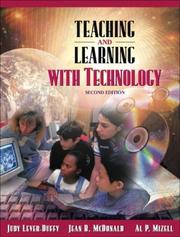 Teaching and learning with technologyJudy Lever-Duffy, Jean B. McDonald · 2002
 The Cambridge handbook of multimedia learningRichard E. Mayer · 2005
 Visual leapJesse Berg · 2015
 Challenging and Controversial PicturebooksJanet Evans · 2015
- 📕Pedagogies, Physical Culture, and Visual MethodsLaura Azzarito, David Kirk · 2013
 Imagery and verbal processesAllan Paivio · 1971
- 📕The Frostig program for the development of visual perceptionMarianne Frostig · 1964
Ranked by number of editions on Open Library, a rough measure of how lasting a book is.
🔗 Related topics
- Kinesthetic learning Kinesthetic learning (American English), kinaesthetic learning (British English), or tactile learning is learning that involves physical activity. As cited…
- Troland Research Awards The Troland Research Awards are an annual prize given by the United States National Academy of Sciences to two researchers (preferably 45 years of age…
- Visual memory Visual memory describes the relationship between perceptual processing and the encoding, storage and retrieval of the resulting neural representations…
- Form perception Form perception is the recognition of visual elements of objects, specifically those to do with shapes, patterns and previously identified important characteris…
- Learning styles Learning styles refer to a range of theories that aim to account for differences in individuals' learning. Although there is ample evidence that individuals…
- Perceptual learning Perceptual learning is the learning of perception skills, such as differentiating two musical tones from one another or categorizations of spatial and…
- Illusion An illusion is a distortion of the senses, which can reveal how the mind normally organizes and interprets sensory stimulation. Although illusions distort…
- Two-streams hypothesis The two-streams hypothesis is a model of the neural processing of vision as well as hearing. The hypothesis, given its initial characterisation in papers…