Everything about Visual memory
Ability to process visual and spatial information

Visual memory describes the relationship between perceptual processing and the encoding, storage and retrieval of the resulting neural representations. Visual memory occurs over a broad time range spanning from eye movements to years in order to visually navigate to a previously visited location. Visual memory is a form of memory which preserves some characteristics of our senses pertaining to visual experience. We are able to place in memory visual information which resembles objects, places, animals or people in a mental image. The experience of visual memory is also referred to as the mind's eye through which we can retrieve from our memory a mental image of original objects, places, animals or people. Visual memory is one of several cognitive systems, which are all interconnected parts that combine to form the human memory. Types of palinopsia, the persistence or recurrence of a visual image after the stimulus has been removed, is a dysfunction of visual memory. Wikipedia →
🧭 Start here: a 6-step reading path
- Read the overview: Visual memoryA 5-minute orientation
- Skim a recent paper: Deep Visual Odometry With Adaptive MemoryInfluential work since 2022
- Pick up a classic book: Installation Art and the Practices of ArchivalismThe most-reprinted book on the subject
- Read the landmark paper: Feature-based memory-driven attentional capture: Visual working memory content affects visual attention.Cited 318 times
- Go sideways: Constructional apraxiaA closely related topic
- Go sideways: Neuroanatomy of memoryA closely related topic
📖 Definitions
No dictionary entry for this exact phrase.
🏆 Landmark papers (most cited)
Feature-based memory-driven attentional capture: Visual working memory content affects visual attention.
Visual Search has Memory
Components of Visual Memory
Infant visual recognition memory
Children’s visual memory of packaging
Visual memory needs categories
Pigeon visual memory capacity.
Visual working memory buffers information retrieved from visual long-term memory
🆕 Influential since 2022
Deep Visual Odometry With Adaptive Memory
Sensory reformatting for a working visual memory
Perceptual encoding benefit of visual memorability on visual memory formation
Verbal descriptions improve visual working memory but have limited impact on visual long-term memory.
Opening Questions in Visual Working Memory
📚 Books worth reading
 Installation Art and the Practices of ArchivalismDavid Houston Jones · 2016
 The visual world in memoryJames R. Brockmole · 2008
 Essential cognitive psychologyAlan J. Parkin · 2000
- 📕Visual MemoryTimothy F. Brady, Wilma A. Bainbridge · 2022
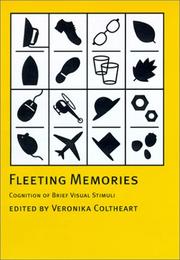 Fleeting MemoriesVeronika Coltheart · 1999
 Visual memorySteven J. Luck · 2008
- 📕Vergleichen und ErkennenThomas Lachmann · 2000
 Eyewitness testimonyGary L. Wells, Elizabeth F. Loftus · 1984
Ranked by number of editions on Open Library, a rough measure of how lasting a book is.
🔗 Related topics
- Constructional apraxia Constructional apraxia is a neurological disorder in which people are unable to perform tasks or movements even though they understand the task, are willing…
- Neuroanatomy of memory The neuroanatomy of memory encompasses a wide variety of anatomical structures in the brain. The hippocampus is a structure in the brain that has been…
- Parietal lobe The parietal lobe is one of the four major lobes of the cerebral cortex in brains. The parietal lobe is positioned above the temporal lobe and behind the…
- Object recognition (cognitive science) Visual object recognition refers to the cognitive ability to identify objects from visual perception. One important signature of visual object recognition…
- Posterior parietal cortex The posterior parietal cortex (the portion of parietal neocortex posterior to the primary somatosensory cortex) plays an important role in planned movements…
- Recognition memory In neuroscience, recognition memory is a type of explicit memory involved during the process of recognizing previously encountered events, objects, or…
- Two-streams hypothesis The two-streams hypothesis is a model of the neural processing of vision as well as hearing. The hypothesis, given its initial characterisation in papers…
- Superior longitudinal fasciculus The superior longitudinal fasciculus (SLF) is an association tract in the brain that is composed of three separate components. It is present in both hemispheres…