Everything about Virtual machine
Software that emulates an entire computer

In computing, a virtual machine (VM) is the virtualization or emulation of a computer system. Virtual machines are based on computer architectures and provide the functionality of a physical computer. Their implementations may involve specialized hardware, software, or a combination of the two. Virtual machines differ and are organized by their function, shown here:System virtual machines provide a substitute for a real machine. They provide the functionality needed to execute entire operating systems. A hypervisor uses native execution to share and manage hardware, allowing for multiple environments that are isolated from one another yet exist on the same physical machine. Modern hypervisors use hardware-assisted virtualization, with virtualization-specific hardware features on the host CPUs providing assistance to hypervisors. Process virtual machines are designed to execute computer programs in a platform-independent environment. Wikipedia →
🧭 Start here: a 6-step reading path
- Read the overview: Virtual machineA 5-minute orientation
- Skim a recent paper: Brain Neuroplasticity Leveraging Virtual Reality and Brain–Computer Interface TechnologiesInfluential work since 2022
- Pick up a classic book: Snow CrashThe most-reprinted book on the subject
- Read the landmark paper: Computational protein–ligand docking and virtual drug screening with the AutoDock suiteCited 2,670 times
- Go sideways: Hardware virtualizationA closely related topic
- Go sideways: System virtual machineA closely related topic
📖 Definitions
No dictionary entry for this exact phrase.
🗂️ The subject at a glance
🏆 Landmark papers (most cited)
Computational protein–ligand docking and virtual drug screening with the AutoDock suite
Virtual Fluoroscopy: Computer-Assisted Fluoroscopic Navigation
Do virtual computer models hinder anatomy learning?
Virtual reality computer simulation
Medical computer vision, virtual reality and robotics
The Virtual Venue: User-Computer Interaction in Information-Rich Virtual Environments
Computer science: Visionary of virtual reality
Virtual Computer Numerical Control System
🆕 Influential since 2022
Brain Neuroplasticity Leveraging Virtual Reality and Brain–Computer Interface Technologies
Teaching the basics of computer graphics in virtual reality
Human-computer interaction for virtual-real fusion
Virtual reservoir computer using an optical resonator
Computer 5G Virtual Reality Environment 3D Clothing Design
📚 Books worth reading
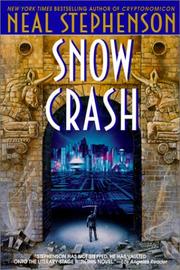 Snow CrashNeal Stephenson · 1992
 Ready Player OneErnest Cline · 2008
 Advances in visual computingGeorge Bebis, Richard Boyle · 2005
 Tom Clancy's Net ForceTom Clancy, Steve R. Pieczenik · 1998
 ReamdeNeal Stephenson · 2011
 Virtualization EssentialsMatthew Portnoy · 2012
 Augmented Reality, Virtual Reality, and Computer GraphicsLucio Tommaso De Paolis, Patrick Bourdot · 2016
 3D Game EnvironmentsLuke Ahearn · 2008
Ranked by number of editions on Open Library, a rough measure of how lasting a book is.
🔗 Related topics
- Hardware virtualization Hardware virtualization is the virtualization of computers as complete hardware platforms, certain logical abstractions of their componentry, or only the…
- System virtual machine A system virtual machine (also called SysVM) is a virtual machine (VM) that provides a complete system platform and supports the execution of a complete…
- Hypervisor A hypervisor, also known as a virtual machine monitor (VMM), is a type of computer software, firmware, or hardware that creates and runs virtual machines…
- Virtualization In computing, virtualization (or virtualisation in Commonwealth English; see spelling differences) abbreviated as v12n, is a series of technologies that…
- VM-aware storage VM-aware storage (VAS) is computer data storage designed specifically for managing storage for virtual machines (VMs) within a data center. The goal is…
- Second Level Address Translation Second Level Address Translation (SLAT), also known as nested paging, is a hardware-assisted virtualization technology which makes it possible to avoid…
- Software-defined storage Software-defined storage (SDS) is a marketing term for computer data storage software for policy-based provisioning and management of data storage independent…
- Timeline of virtualization technologies In computing, virtualization is the use of a computer to simulate another computer. The following is a chronological list of virtualization technologies…