Everything about Virtual machine
Software that emulates an entire computer

In computing, a virtual machine (VM) is the virtualization or emulation of a computer system. Virtual machines are based on computer architectures and provide the functionality of a physical computer. Their implementations may involve specialized hardware, software, or a combination of the two. Virtual machines differ and are organized by their function, shown here:System virtual machines provide a substitute for a real machine. They provide the functionality needed to execute entire operating systems. A hypervisor uses native execution to share and manage hardware, allowing for multiple environments that are isolated from one another yet exist on the same physical machine. Modern hypervisors use hardware-assisted virtualization, with virtualization-specific hardware features on the host CPUs providing assistance to hypervisors. Process virtual machines are designed to execute computer programs in a platform-independent environment. Wikipedia →
🧭 Start here: a 6-step reading path
- Read the overview: Virtual machineA 5-minute orientation
- Skim a recent paper: A Machine Learning-Driven Virtual Biopsy System For Kidney Transplant PatientsInfluential work since 2022
- Pick up a classic book: Virtual HumansThe most-reprinted book on the subject
- Read the landmark paper: Energy-Aware Virtual Machine Consolidation Algorithm Based on Ant Colony SystemCited 57 times
- Go sideways: Hardware virtualizationA closely related topic
- Go sideways: System virtual machineA closely related topic
📖 Definitions
No dictionary entry for this exact phrase.
🗂️ The subject at a glance
🏆 Landmark papers (most cited)
Energy-Aware Virtual Machine Consolidation Algorithm Based on Ant Colony System
A virtual machine time-sharing system
A Virtual Machine Based Information Flow Control System for Policy Enforcement
Liquid: A Scalable Deduplication File System for Virtual Machine Images
Performance evaluation of virtual machine‐based Grid workflow system
Virtual Machine-based Intrusion Detection System Framework in Cloud Computing Environment
Virtual machine file system
Control of Man-Machine System Based on Virtual Tool Dynamics.
🆕 Influential since 2022
A Machine Learning-Driven Virtual Biopsy System For Kidney Transplant Patients
Co-residence based data theft game in cloud system with virtual machine replication and cancellation
Virtual Machine Migration-Based Intrusion Detection System in Cloud Environment Using Deep Recurrent Neural Network
Machine learning enabled robot-assisted virtual health monitoring system design and development
An intelligent decision system for virtual machine migration based on specific Q-learning
📚 Books worth reading
- 📕Virtual HumansDavid Burden, Maggi Savin-Baden · 2019
 The Java virtual machine specificationTim Lindholm, Frank Yellin · 1996
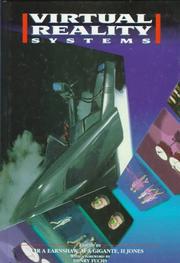 Virtual reality systemsRae A. Earnshaw, M. A. Gigante · 1993
 The green and virtual data centerGreg Schulz · 2009
 Reactive Messaging Patterns with the Actor ModelVaughn Vernon · 2015
- 📕The Java virtual machine specificationTim Lindholm · 1997
- 📕Mastering Virtual Machine Manager 2008 R2Michael Michael · 2009
- 📕Virtual presenceNancy Ann Budden · 1997
Ranked by number of editions on Open Library, a rough measure of how lasting a book is.
🔗 Related topics
- Hardware virtualization Hardware virtualization is the virtualization of computers as complete hardware platforms, certain logical abstractions of their componentry, or only the…
- System virtual machine A system virtual machine (also called SysVM) is a virtual machine (VM) that provides a complete system platform and supports the execution of a complete…
- Hypervisor A hypervisor, also known as a virtual machine monitor (VMM), is a type of computer software, firmware, or hardware that creates and runs virtual machines…
- Virtualization In computing, virtualization (or virtualisation in Commonwealth English; see spelling differences) abbreviated as v12n, is a series of technologies that…
- VM-aware storage VM-aware storage (VAS) is computer data storage designed specifically for managing storage for virtual machines (VMs) within a data center. The goal is…
- Second Level Address Translation Second Level Address Translation (SLAT), also known as nested paging, is a hardware-assisted virtualization technology which makes it possible to avoid…
- Software-defined storage Software-defined storage (SDS) is a marketing term for computer data storage software for policy-based provisioning and management of data storage independent…
- Timeline of virtualization technologies In computing, virtualization is the use of a computer to simulate another computer. The following is a chronological list of virtualization technologies…