Everything about Variable-length integer
Encoding method for variable-length integers
A variable-length integer is a variable-length encoded representation of an integer value using a sequence of bytes. The number of bytes that is needed depends on the value being represented, with larger magnitudes using more bytes than smaller ones. A variable-length integer has no inherent bound on the range of values that can be expressed, unless such a bound is imposed in a particular application. Such schemes have been in use in applications at least since the 1983 specification of the MIDI file format. Variations exist for representing signed and unsigned integers. Wikipedia →
🧭 Start here: a 6-step reading path
- Read the overview: Variable-length integerA 5-minute orientation
- Pick up a classic book: Java software solutionsThe most-reprinted book on the subject
- Read the landmark paper: Burrows–Wheeler compression with variable length integer codesCited 16 times
- Go sideways: LEB128A closely related topic
- Go sideways: Bit numberingA closely related topic
📖 Definitions
No dictionary entry for this exact phrase.
🗂️ The subject at a glance
🏆 Landmark papers (most cited)
Burrows–Wheeler compression with variable length integer codes
Variable-length integer codes based on the Goldbach conjecture, and other additive codes
Analysis of Variable-Length Codes for Integer Encoding in Hyperspectral Data Compression with the k2-Raster Compact Data Structure
Integer Wavelet based Secret Data Hiding by Selecting Variable Bit Length
Variable length integer codes based on radix number system conversion
Vbinary: variable length integer coding revisited
A New Variable-Length Integer Code for Integer Representation and Its Application to Text Compression
Vbinary: variable length integer coding revisited
📚 Books worth reading
 Java software solutionsLewis, John, John E. Lewis Ph. D. · 1997
 C How to ProgramPaul J. Deitel, Harvey M. Deitel · 2007
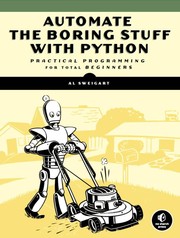 Automate the Boring Stuff with PythonAl Sweigart · 2015
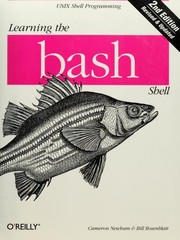 Learning the bash ShellCameron Newham, Bill Rosenblatt · 1995
 Scott Foresman-Addison Wesley enVisionMATH-Grade 3Randall I. Charles · 2009
 An introduction to data structures with applicationsJean-Paul Tremblay, Paul Gordon Sorenson · 1976
- 📕Structural Aspects of Quantum Field Theory and Noncommutative GeometryGerhard Grensing · 2013
 Introduction to C ProgrammingReema Thareja · 2013
Ranked by number of editions on Open Library, a rough measure of how lasting a book is.
🔗 Related topics
- LEB128 LEB128 or Little Endian Base 128 is a variable-length code compression used to store arbitrarily large integers in a small number of bytes. LEB128 is used…
- Bit numbering In computing, bit numbering is the convention used to identify the bit positions in a binary number. The bits can be those in a memory byte or word, or…
- LZMA LZMA (Lempel–Ziv–Markov chain algorithm) is a lossless data compression algorithm developed since 1998 by Igor Pavlov, the developer of 7-Zip. It has been…
- Integer (computer science) In computer science, an integer is a datum of integral data type, a data type that represents some range of mathematical integers. Integral data types…
- Binary-coded decimal In computing and electronic systems, binary-coded decimal (BCD) is a class of binary encodings of decimal numbers where each digit is represented by a…
- Endianness In computing, endianness is the order in which bytes within a word data type are transmitted over a data communication medium or addressed in computer…
- ASN.1 Abstract Syntax Notation One (ASN.1) is a standard interface description language (IDL) for defining data structures that can be serialized and deserialized…
- Two's complement Two's complement is the most common method of representing signed (positive, negative, and zero) integers on computers, and more generally, fixed point…