Live briefing
Everything about User-mode Linux
Virtualisation software
User-mode Linux (UML) is a virtualization system for the Linux operating system based on an architectural port of the Linux kernel to its own system call interface, which enables multiple virtual Linux kernel-based operating systems to run as an application within a normal Linux system. A Linux kernel compiled for the um architecture can then boot as a process under another Linux kernel, entirely in user space, without affecting the host environment's configuration or stability. Wikipedia →
🧭 Start here: a 6-step reading path
- Read the overview: User-mode LinuxA 5-minute orientation
- Pick up a classic book: Modern Operating SystemsThe most-reprinted book on the subject
- Read the landmark paper: Teaching operating systems administration with user mode linuxCited 2 times
- Go sideways: QEMUA closely related topic
- Go sideways: VirtualizationA closely related topic
📖 Definitions
No dictionary entry for this exact phrase.
🗂️ The subject at a glance
🏆 Landmark papers (most cited)
📚 Books worth reading
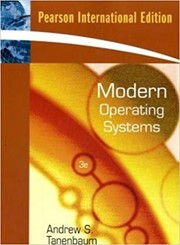 Modern Operating SystemsAndrew S. Tanenbaum, Herbert Bos · 1992
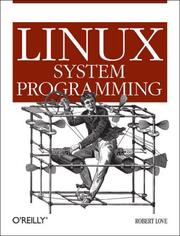 Linux System ProgrammingRobert Love · 2007
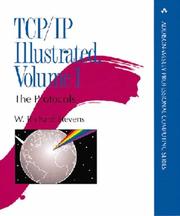 TCP/IP IllustratedW. Richard Stevens, Kevin R. Fall · 1993
 User Mode LinuxJeff Dike · 2006
- 📕Jaringan Komputer Dengan User Mode LinuxEko Heryanto · 2016
- 📕UML - USER MODE LINUXChristoph Scharnböck · 2009
 Hacking Linux exposedBri Hatch, James Lee · 2001
 HackingAman Kumar Jha · 2015
Ranked by number of editions on Open Library, a rough measure of how lasting a book is.
🔗 Related topics
- QEMU The Quick Emulator (QEMU) is a free and open-source machine emulator and virtualizer. As a Virtual Machine Monitor (VMM) it supports a number of hypervisors…
- Virtualization In computing, virtualization (or virtualisation in Commonwealth English; see spelling differences) abbreviated as v12n, is a series of technologies that…
- Hypervisor A hypervisor, also known as a virtual machine monitor (VMM), is a type of computer software, firmware, or hardware that creates and runs virtual machines…
- Xen Xen (pronounced /ˈzɛn/) is a free and open-source type-1 (bare-metal) hypervisor, providing services that allow multiple computer operating systems to…
- System virtual machine A system virtual machine (also called SysVM) is a virtual machine (VM) that provides a complete system platform and supports the execution of a complete…
- Kernel-based Virtual Machine Kernel-based Virtual Machine (KVM) is a free and open-source virtualization module in the Linux kernel that allows the kernel to function as a hypervisor…
- Protection ring In computer science, hierarchical protection domains, often called protection rings, are mechanisms to protect data and functionality from faults (by improving…
- Sandbox (computer security) In computer security, a sandbox is a security mechanism for separating running programs, usually in an effort to mitigate system failures and/or software…