Everything about Unix-like
Operating system that behaves similarly to Unix

A Unix-like operating system is one that behaves in a manner similar to a Unix system, although not necessarily conforming to or being certified to any version of the Single UNIX Specification. A Unix-like application is one that behaves like the corresponding Unix command or shell. Although there are general philosophies for Unix design, there is no technical standard defining the term, and opinions can differ about the degree to which a particular operating system or application is Unix-like. Some well-known examples of Unix-like operating systems include Linux, FreeBSD and OpenBSD. These systems are often used on servers as well as on personal computers and other devices. Many popular applications, such as the Apache web server and the Bash shell, are also designed to be used on Unix-like systems. Wikipedia →
🧭 Start here: a 6-step reading path
- Read the overview: Unix-likeA 5-minute orientation
- Skim a recent paper: PROTECTING UNIX-LIKE SYSTEM ENVIRONMENTS FROM EXPLOITATION OF MEMORY SECURITY WEAKNESSESInfluential work since 2022
- Pick up a classic book: The book of XenThe most-reprinted book on the subject
- Read the landmark paper: CSPL: an Ada95-like, Unix-based process environmentCited 18 times
- Go sideways: POSIXA closely related topic
- Go sideways: Single UNIX SpecificationA closely related topic
📖 Definitions
Adjective rare spelling of Unix-like
🗂️ The subject at a glance
🏆 Landmark papers (most cited)
CSPL: an Ada95-like, Unix-based process environment
CRITERIA FOR SELECTING VIRTUALIZATION SOFTWARE IN TEACHING UNIX-LIKE OPERATING SYSTEMS
A systematic approach to understanding MACB timestamps on Unix-like systems
Criteria for UNIX-like systems
Cromix*—Cromemco's Outstanding Unix†–Like Operating System
Cromix*—Cromemco's Outstanding Unix†–Like Operating System
Cromix*—Cromemco's Outstanding Unix†–Like Operating System
Cromix*—Cromemco's Outstanding Unix†–Like Operating System
🆕 Influential since 2022
📚 Books worth reading
 The book of XenLuke S. Crawford, Chris Takemura · 2009
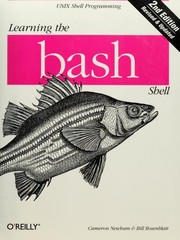 Learning the bash ShellCameron Newham, Bill Rosenblatt · 1995
 CouchDBJ. Chris Anderson, Jan Lehnardt · 2010
- 📕Systems management under UNIXN. G. Backhurst · 1986
 On commandAllen I. Holub · 1987
- 📕A UNIX-Like Shell for MS-DOSAllen Holub · 1986
- 📕Lutil a UNIX-Like Utility Package for MS-DOSAllen Holub · 1986
- 📕TUNIS-2Patrick Cardozo · 1980
Ranked by number of editions on Open Library, a rough measure of how lasting a book is.
🔗 Related topics
- POSIX The Portable Operating System Interface (POSIX; IPA: /ˈpɒz.ɪks/) is a family of standards specified by the IEEE Computer Society for maintaining compatibility…
- Single UNIX Specification The Single UNIX Specification (SUS) is a standard for computer operating systems, compliance with which is required to qualify for using the "UNIX" trademark…
- List of Unix systems Each version of the UNIX Time-Sharing System evolved from the version before, with version one evolving from the prototypal Unix. Not all variants and…
- Comparison of user features of operating systems Comparison of user features of operating systems refers to a comparison of the general user features of major operating systems in a narrative format.…
- A/UX A/UX is a Unix-based operating system from Apple Computer for Macintosh computers, integrated with System 7's graphical interface and application compatibility…
- Unix Unix (/ˈjuːnɪks/ , YOO-niks; trademarked as UNIX) is a family of multitasking, multi-user computer operating systems that derive from the original AT&T…
- Linux Linux (/ˈlɪnʊks/ LIN-uuks) is a family of free and open-source software Unix-like operating systems based on the Linux kernel, which was first released…
- Darwin (operating system) Darwin is the core Unix-like operating system of macOS, iOS, watchOS, tvOS, iPadOS, audioOS, visionOS, and bridgeOS. It previously existed as an independent…