Everything about Linux
Family of Unix-like operating systems that use the Linux kernel

Linux is a family of free and open-source software Unix-like operating systems based on the Linux kernel, which was first released on 17 September 1991 by Linus Torvalds. Some members of the family are typically packaged as a distribution, which includes the kernel alongside supporting system software and libraries developed by third parties—such as GNU, Red Hat, and X.Org—to create a complete operating system; however, not all Linux-based operating systems are considered distros, with Android being an example. Linux was originally designed as a clone of Unix and is distributed under the copyleft GPL license. Wikipedia →
🧭 Start here: a 6-step reading path
- Read the overview: LinuxA 5-minute orientation
- Skim a recent paper: MEGA 12.1: Cross-Platform Release for macOS and Linux Operating SystemsInfluential work since 2022
- Pick up a classic book: LinuxThe most-reprinted book on the subject
- Read the landmark paper: Arlequin suite ver 3.5: a new series of programs to perform population genetics analyses under Linux and WindowsCited 14,423 times
- Go sideways: History of LinuxA closely related topic
- Go sideways: GNU ProjectA closely related topic
📖 Definitions
Noun Any unix-like operating system that uses the Linux kernel.
🗂️ The subject at a glance
🏆 Landmark papers (most cited)
Arlequin suite ver 3.5: a new series of programs to perform population genetics analyses under Linux and Windows
genepop ’007: a complete re‐implementation of the genepop software for Windows and Linux
PsyToolkit: A software package for programming psychological experiments using Linux
Coase's Penguin, or, Linux and "The Nature of the Firm"
Motivation of software developers in Open Source projects: an Internet-based survey of contributors to the Linux kernel
Selective revealing in open innovation processes: The case of embedded Linux
TNT version 1.6, with a graphical interface for MacOS and Linux, including new routines in parallel
Open Source Software User Communities: A Study of Participation in Linux User Groups
🆕 Influential since 2022
MEGA 12.1: Cross-Platform Release for macOS and Linux Operating Systems
APTSHIELD: A Stable, Efficient and Real-Time APT Detection System for Linux Hosts
NTT Architecture for a Linux-Ready RISC-V Fully-Homomorphic Encryption Accelerator
Design and implementation of an intrusion detection system by using Extended BPF in the Linux kernel
Operating System Noise in the Linux Kernel
📚 Books worth reading
 LinuxTim Parker · 1996
 Linux For DummiesDee-Ann LeBlanc, Melanie Hoag · 1999
 Just for funLinus Torvalds, David Diamond · 2001
 Linux device driversAlessandro Rubini, Jonathan Corbet · 1998
 The Cathedral and the BazaarEric S. Raymond · 1999
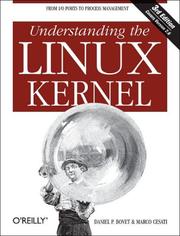 Understanding The Linux KernelDaniel P. Bovet · 2000
 Linux Command Line and Shell Scripting BibleRichard Blum, Christine Bresnahan · 2008
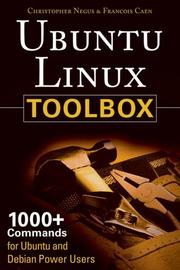 Ubuntu Linux toolboxChristopher Negus · 2007
Ranked by number of editions on Open Library, a rough measure of how lasting a book is.
🔗 Related topics
- History of Linux Linux began in 1991 as a personal project by Finnish student Linus Torvalds to create a new free operating system kernel. The resulting Linux kernel has…
- GNU Project The GNU Project (/ɡnuː/ GNOO) is a free software, mass collaboration project announced by Richard Stallman on September 27, 1983. Its goal is to provide…
- GNU/Linux naming controversy Since the 1990s, there has been ongoing debate over whether operating systems that use the Linux kernel in combination with GNU software should be referred…
- Criticism of Linux The criticism of Linux focuses on issues concerning use of operating systems which use the Linux kernel. While the Linux-based Android operating system…
- Tanenbaum–Torvalds debate Starting in 1992, Andrew S. Tanenbaum and Linus Torvalds had a written debate over the Internet regarding the Linux kernel and kernel architecture in general…
- Minix MINIX is a family of Unix-like operating systems based on a microkernel architecture, written by American-Dutch computer scientist Andrew S. Tanenbaum…
- Comparison of user features of operating systems Comparison of user features of operating systems refers to a comparison of the general user features of major operating systems in a narrative format.…
- GNU GNU (/ɡnuː/ GNOO) is an extensive collection of free software (387 packages as of June 2025[update]), which can be used as an operating system or can be…