Everything about History of Linux
Linux began in 1991 as a personal project by Finnish student Linus Torvalds to create a new free operating system kernel. The resulting Linux kernel has been marked by constant growth throughout its history. Since the initial release of its source code in 1991, it has grown from a small number of C files under a license prohibiting commercial distribution to the 4.15 version in 2018 with more than 23.3 million lines of source code, not counting comments, under the GNU General Public License v2 with a syscall exception meaning anything that uses the kernel via system calls are not subject to the GNU GPL. Wikipedia →
🧭 Start here: a 6-step reading path
- Read the overview: History of LinuxA 5-minute orientation
- Skim a recent paper: How Configurable Is the Linux Kernel? Analyzing Two Decades of Feature-Model History—RCR ReportInfluential work since 2022
- Pick up a classic book: The Autobiography of Benjamin FranklinThe most-reprinted book on the subject
- Read the landmark paper: How Configurable Is the Linux Kernel? Analyzing Two Decades of Feature-Model HistoryCited 17 times
- Go sideways: Samizdat: And Other Issues Regarding the 'Source' of Open Source CodeA closely related topic
- Go sideways: LinuxA closely related topic
📖 Definitions
No dictionary entry for this exact phrase.
🏆 Landmark papers (most cited)
How Configurable Is the Linux Kernel? Analyzing Two Decades of Feature-Model History
What the History of Linux Says About the Future of Cryptocurrencies
The Display System of a Patient's History Using the RFID and Linux
2A2-B25 Development of a Task Switch History Visualization Tool for ART-Linux
🆕 Influential since 2022
📚 Books worth reading
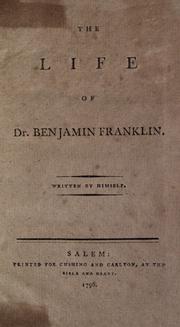 The Autobiography of Benjamin FranklinBenjamin Franklin · 1791
Ranked by number of editions on Open Library, a rough measure of how lasting a book is.
🔗 Related topics
- Samizdat: And Other Issues Regarding the 'Source' of Open Source Code Samizdat: And Other Issues Regarding the 'Source' of Open Source Code is a 2004 report by Kenneth Brown. The report suggests that the Linux kernel may…
- Linux Linux (/ˈlɪnʊks/ LIN-uuks) is a family of free and open-source software Unix-like operating systems based on the Linux kernel, which was first released…
- SCO Group, Inc. v. International Business Machines Corp. SCO Group, Inc. v. International Business Machines Corp., commonly abbreviated as SCO v. IBM, was a civil lawsuit in the United States District Court of…
- Alexis de Tocqueville Institution ‹ The template below (Conservatism US) is being considered for merging with Right-wing populism US. See templates for discussion to help reach a consensus…
- Tanenbaum–Torvalds debate Starting in 1992, Andrew S. Tanenbaum and Linus Torvalds had a written debate over the Internet regarding the Linux kernel and kernel architecture in general…
- History of free and open-source software The history of free and open-source software begins at the advent of computer software in the early half of the 20th century. In the 1950s and 1960s, computer…
- GNU Project The GNU Project (/ɡnuː/ GNOO) is a free software, mass collaboration project announced by Richard Stallman on September 27, 1983. Its goal is to provide…
- SCO–Linux disputes In a series of legal disputes between SCO Group and Linux vendors and users, SCO alleged that its license agreements with IBM meant that source code IBM…