Live briefing
Everything about Undecidable problem
Yes-or-no question that cannot ever be solved by a computer
In computability theory and computational complexity theory, an undecidable problem is a decision problem for which it is proved to be impossible to construct an algorithm that always leads to a correct yes-or-no answer. The halting problem is an example: it can be proven that there is no algorithm that correctly determines whether an arbitrary program eventually halts when run. Wikipedia →
🧭 Start here: a 6-step reading path
- Read the overview: Undecidable problemA 5-minute orientation
- Skim a recent paper: Undecidable problems in quantum field theoryInfluential work since 2022
- Pick up a classic book: Writing ArgumentsThe most-reprinted book on the subject
- Read the landmark paper: The Implication Problem for Functional and Inclusion Dependencies is UndecidableCited 113 times
- Go sideways: Gödel's incompleteness theoremsA closely related topic
- Go sideways: Halting problemA closely related topic
📖 Definitions
No dictionary entry for this exact phrase.
🏆 Landmark papers (most cited)
The Implication Problem for Functional and Inclusion Dependencies is Undecidable
The equality problem for vector addition systems is undecidable
TARSKI’S FINITE BASIS PROBLEM IS UNDECIDABLE
Whitehead's Problem is Undecidable
THE FINITENESS PROBLEM FOR AUTOMATON SEMIGROUPS IS UNDECIDABLE
An undecidable problem in correspondence theory
A codicity undecidable problem in the plane
The equivalence problem for deterministic T0L-systems is undecidable
🆕 Influential since 2022
📚 Books worth reading
 Writing ArgumentsJohn D. Ramage, John C. Bean · 2000
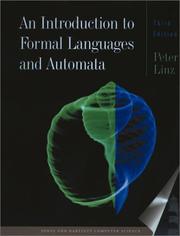 An introduction to formal languages and automataPeter Linz · 1990
 Introduction to automata theory, languages, and computationJohn E. Hopcroft, Jeffrey D. Ullman · 1979
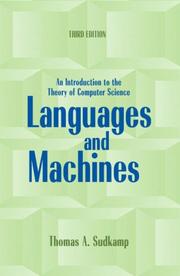 Languages and machinesThomas A. Sudkamp · 1988
 Contemporary Anarchist StudiesAnthony J. Nocella, Randall Amster · 2009
 Snow mountain passageJames D. Houston · 2001
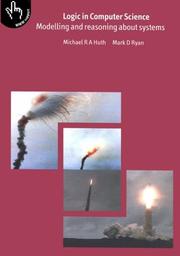 Logic in Computer ScienceMark Ryan · 1999
 My life undecidedJessica Brody · 2011
Ranked by number of editions on Open Library, a rough measure of how lasting a book is.
🔗 Related topics
- Gödel's incompleteness theorems Gödel's incompleteness theorems are two theorems of mathematical logic that are concerned with the limits of provability in formal axiomatic theories.…
- Halting problem In computability theory, the halting problem is the decision problem of, given an arbitrary computer program and an input, determining whether said program…
- Entscheidungsproblem In mathematics and computer science, the Entscheidungsproblem (German for 'decision problem'; pronounced [ɛntˈʃaɪ̯dʊŋspʁoˌbleːm]) is a challenge posed…
- Hilbert's tenth problem Hilbert's tenth problem is the tenth on the list of mathematical problems that the German mathematician David Hilbert posed in 1900. It is the challenge…
- Timeline of mathematical logic A timeline of mathematical logic; see also history of logic. 1847 – George Boole proposes symbolic logic in The Mathematical Analysis of Logic, defining…
- List of statements independent of ZFC The mathematical statements discussed below are provably independent of ZFC (the canonical axiomatic set theory of contemporary mathematics, consisting…
- Robinson arithmetic In mathematics, Robinson arithmetic is a finitely axiomatized fragment of first-order Peano arithmetic (PA), first set out by Raphael M. Robinson in 1950…
- Computability theory Computability theory, also known as recursion theory, is a branch of mathematical logic, computer science, and the theory of computation that originated…