Live briefing
Everything about Computability theory
Study of computable functions and Turing degrees
Computability theory, also known as recursion theory, is a branch of mathematical logic, computer science, and the theory of computation that originated in the 1930s with the study of computable functions and Turing degrees. The field has since expanded to include the study of generalized computability and definability. In these areas, computability theory overlaps with proof theory and effective descriptive set theory. Wikipedia →
🧭 Start here: a 6-step reading path
- Read the overview: Computability theoryA 5-minute orientation
- Skim a recent paper: Computability Theory on Polish Metric SpacesInfluential work since 2022
- Pick up a classic book: Advances in Computers, Volume 49 (Advances in Computers)The most-reprinted book on the subject
- Read the landmark paper: Superintelligence Cannot be Contained: Lessons from Computability TheoryCited 51 times
- Go sideways: Computably enumerable setA closely related topic
- Go sideways: Turing jumpA closely related topic
📖 Definitions
Noun Recursion theory.
Noun The branch of the theory of computation that studies which problems are computationally solvable using different models.
🏆 Landmark papers (most cited)
Superintelligence Cannot be Contained: Lessons from Computability Theory
Real Number Computability and Domain Theory
Computability theory of generalized functions
Computability Theory and Differential Geometry
Open sets in computability theory and reverse mathematics
Pincherle's theorem in reverse mathematics and computability theory
Kolmogorov entropy in the context of computability theory
First Steps in Synthetic Computability Theory
🆕 Influential since 2022
📚 Books worth reading
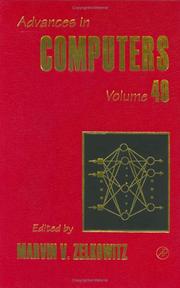 Advances in Computers, Volume 49 (Advances in Computers)Marvin V. Zelkowitz, Marshall C. Yovits · 1995
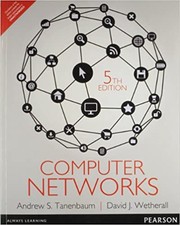 Computer NetworksAndrew S. Tanenbaum, John David Wetherall · 1981
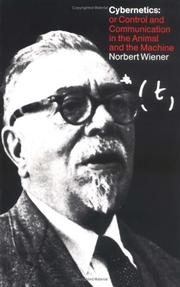 Cybernetics, or control and communication in the animal and the machineNorbert Wiener, Doug Hill · 1948
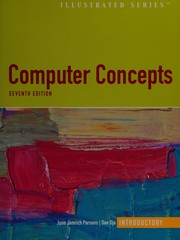 Computer ConceptsJune Jamrich Parsons, Dan Oja · 1996
 Advances in ComputersMarshall C. Yovits · 1971
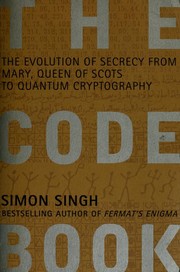 The Code BookSimon Singh · 1999
 Invitation to Computer ScienceG. Michael Schneider, Judith L. Gersting · 1995
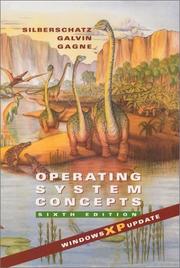 Operating System ConceptsAbraham Silberschatz · 1988
Ranked by number of editions on Open Library, a rough measure of how lasting a book is.
🔗 Related topics
- Computably enumerable set In computability theory, a set S of natural numbers is called computably enumerable (c.e.), recursively enumerable (r.e.), semidecidable, partially decidable…
- Turing jump In computability theory, the Turing jump or Turing jump operator, named after Alan Turing, is an operation that assigns to each decision problem X a…
- Turing degree In computer science and mathematical logic the Turing degree (named after Alan Turing) or degree of unsolvability of a set of natural numbers measures…
- PA degree In the mathematical field of computability theory, a PA degree is a Turing degree that computes a complete extension of Peano arithmetic (Jockusch 1987)…
- Creative and productive sets In computability theory, productive sets and creative sets are types of sets of natural numbers that have important applications in mathematical logic…
- Turing reduction In computability theory, a Turing reduction from a decision problem A to a decision problem B is an oracle machine that decides problem A given an oracle…
- Low (computability) In computability theory, a Turing degree [X] is low if its Turing jump [X′] = 0′. A subset S ⊂ N {\displaystyle S\subset \mathbb {N} } is low if its Turing…
- Arithmetical hierarchy In mathematical logic, the arithmetical hierarchy, arithmetic hierarchy or Kleene–Mostowski hierarchy (after mathematicians Stephen Cole Kleene and Andrzej…