Live briefing

Everything about Turing completeness
Ability of a computing system to simulate Turing machines
In computability theory, a system of data-manipulation rules is said to be Turing-complete or computationally universal if it can be used to simulate any Turing machine. This means that this system is able to recognize or decode other data-manipulation rule sets. Turing completeness is used as a way to express the power of such a data-manipulation rule set. Virtually all programming languages today are Turing-complete. Wikipedia →
🧭 Start here: a 6-step reading path
- Read the overview: Turing completenessA 5-minute orientation
- Skim a recent paper: Turing instability analysis of a reaction–diffusion system for rumor propagation in continuous space and complex networksInfluential work since 2022
- Pick up a classic book: Works [37 plays, 5 poems, sonnets]The most-reprinted book on the subject
- Read the landmark paper: Computational Complexity of Probabilistic Turing MachinesCited 486 times
- Go sideways: ComputabilityA closely related topic
- Go sideways: Theory of computationA closely related topic
📖 Definitions
No dictionary entry for this exact phrase.
🏆 Landmark papers (most cited)
Computational Complexity of Probabilistic Turing Machines
A Completeness Theory for Polynomial (Turing) Kernelization
BANISHING ROBUST TURING COMPLETENESS
Mathematical programming: Turing completeness and applications to software analysis
Programming Paradigms, Turing Completeness and Computational Thinking
Turing Tumble is Turing-Complete
On polynomial-time Turing and many-one completeness in PSPACE
Turing-completeness of asynchronous non-camouflage cellular automata
🆕 Influential since 2022
Turing instability analysis of a reaction–diffusion system for rumor propagation in continuous space and complex networks
Turing patterns in simplicial complexes
Sleptsov nets are Turing-complete
Turing Completeness andSid Meier’s Civilization
Expressivity of AuDaLa: Turing Completeness and Possible Extensions
📚 Books worth reading
 Works [37 plays, 5 poems, sonnets]William Shakespeare · 1794
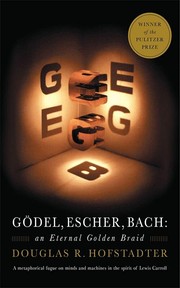 Gödel, Escher, BachDouglas R. Hofstadter · 1979
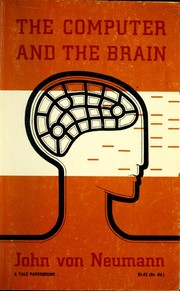 The Computer and the BrainJohn von Neumann · 1958
 An introduction to formal languages and automataPeter Linz · 1990
 Introduction to automata theory, languages, and computationJohn E. Hopcroft, Jeffrey D. Ullman · 1979
 Battle of witsStephen Budiansky · 2000
 Languages and machinesThomas A. Sudkamp · 1988
 Digital planetGeorge Beekman, Ben Beekman · 2011
Ranked by number of editions on Open Library, a rough measure of how lasting a book is.
🔗 Related topics
- Computability Computability is the ability to solve a problem by an effective procedure. It is a key topic of the field of computability theory within mathematical logic…
- Theory of computation In theoretical computer science and mathematics, the theory of computation is the branch that deals with what problems can be solved on a model of computation…
- Halting problem In computability theory, the halting problem is the decision problem of, given an arbitrary computer program and an input, determining whether said program…
- Turing machine A Turing machine is a mathematical model of computation describing an abstract machine that manipulates symbols on a strip of tape according to a table…
- Universal Turing machine In computer science, a universal Turing machine (UTM) is a Turing machine capable of computing any computable sequence, as described by Alan Turing in…
- Decider (Turing machine) In computability theory, a decider is a Turing machine that halts for every input. A decider is also called a total Turing machine as it represents a total…
- Automata theory Automata theory is the study of abstract machines and automata, as well as the computational problems that can be solved using them. It is a theory in…
- Counter machine In formal logic and theoretical computer science, a counter machine or counter automaton is an abstract machine used to model computation. A counter machine…