Live briefing
Everything about Computability
Ability to solve a problem by an effective procedure
Computability is the ability to solve a problem by an effective procedure. It is a key topic of the field of computability theory within mathematical logic and the theory of computation within computer science. The computability of a problem is closely linked to the existence of an algorithm to solve the problem. Wikipedia →
🧭 Start here: a 6-step reading path
- Read the overview: ComputabilityA 5-minute orientation
- Skim a recent paper: HGVS Nomenclature 2024: improvements to community engagement, usability, and computabilityInfluential work since 2022
- Pick up a classic book: Advances in Computers, Volume 49 (Advances in Computers)The most-reprinted book on the subject
- Read the landmark paper: Computability of global solutions to factorable nonconvex programs: Part I — Convex underestimating problemsCited 2,007 times
- Go sideways: Theory of computationA closely related topic
- Go sideways: Halting problemA closely related topic
📖 Definitions
Noun The property of being computable by purely mechanical means.
🏆 Landmark papers (most cited)
Computability of global solutions to factorable nonconvex programs: Part I — Convex underestimating problems
The Gaussian hare and the Laplacian tortoise: computability of squared-error versus absolute-error estimators
The topological structure of asynchronous computability
Computability of Recursive Functions
Turing computability with neural nets
Computability and λ-definability
Linear-time computability of combinatorial problems on series-parallel graphs
Toward computability of trace distance discord
🆕 Influential since 2022
HGVS Nomenclature 2024: improvements to community engagement, usability, and computability
Algorithmic Computability and Approximability of Capacity-Achieving Input Distributions
Computability of Optimizers
Computability and Beltrami fields in Euclidean space
Computability of topological pressure on compact shift spaces beyond finite type*
📚 Books worth reading
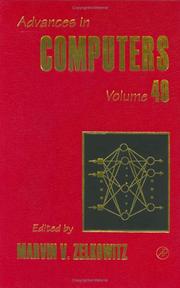 Advances in Computers, Volume 49 (Advances in Computers)Marvin V. Zelkowitz, Marshall C. Yovits · 1995
 Steve JobsWalter Isaacson · 2011
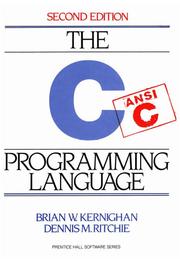 The C Programming LanguageBrian W. Kernighan, Dennis MacAlistair Ritchie · 1978
 Introducing ComputersRobert H. Blissmer · 1988
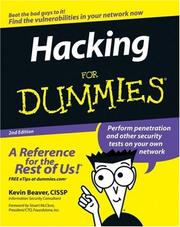 Hacking for DummiesKevin Beaver, Jutta Schmidt · 2004
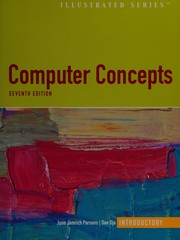 Computer ConceptsJune Jamrich Parsons, Dan Oja · 1996
 C++Paul J. Deitel, Harvey M. Deitel · 1996
 Systems Analysis and DesignAlan Dennis, Barbara Haley Wixom · 2000
Ranked by number of editions on Open Library, a rough measure of how lasting a book is.
🔗 Related topics
- Theory of computation In theoretical computer science and mathematics, the theory of computation is the branch that deals with what problems can be solved on a model of computation…
- Halting problem In computability theory, the halting problem is the decision problem of, given an arbitrary computer program and an input, determining whether said program…
- Automata theory Automata theory is the study of abstract machines and automata, as well as the computational problems that can be solved using them. It is a theory in…
- Linear bounded automaton In computer science, a linear bounded automaton (abbreviated LBA) is a restricted form of Turing machine that functions as a more accurate model of a real-world…
- Deterministic finite automaton In the theory of computation, a branch of theoretical computer science, a deterministic finite automaton (DFA) is a finite-state machine that accepts or…
- Turing machine A Turing machine is a mathematical model of computation describing an abstract machine that manipulates symbols on a strip of tape according to a table…
- Recursively enumerable language In mathematics, logic and computer science, a formal language is called recursively enumerable (also recognizable, partially decidable, semidecidable,…
- Turing completeness In computability theory, a system of data-manipulation rules (such as a model of computation, a computer's instruction set, a programming language, or…