Everything about Turbo equalizer
In digital communications, a turbo equalizer is a type of receiver used to receive a message corrupted by a communication channel with intersymbol interference (ISI). It approaches the performance of a maximum a posteriori (MAP) receiver via iterative message passing between a soft-in soft-out (SISO) equalizer and a SISO decoder. It is related to turbo codes in that a turbo equalizer may be considered a type of iterative decoder if the channel is viewed as a non-redundant convolutional code. The turbo equalizer is different from classic a turbo-like code, however, in that the 'channel code' adds no redundancy and therefore can only be used to remove non-gaussian noise. Wikipedia →
🧭 Start here: a 6-step reading path
- Read the overview: Turbo equalizerA 5-minute orientation
- Skim a recent paper: Doubly-Iterative Sparsified MMSE Turbo Equalization for OTFS ModulationInfluential work since 2022
- Pick up a classic book: Adaptive wireless transceiversThe most-reprinted book on the subject
- Read the landmark paper: Iterative correction of intersymbol interference: Turbo‐equalizationCited 1,059 times
- Go sideways: Turbo codeA closely related topic
- Go sideways: Claude BerrouA closely related topic
🏆 Landmark papers (most cited)
Iterative correction of intersymbol interference: Turbo‐equalization
Turbo equalization: principles and new results
Turbo equalization
Turbo equalization: adaptive equalization and channel decoding jointly optimized
🆕 Influential since 2022
Doubly-Iterative Sparsified MMSE Turbo Equalization for OTFS Modulation
Multitask Sparse Bayesian Channel Estimation for Turbo Equalization in Underwater Acoustic Communications
Turbo-Detection for Multilayer Magnetic Recording Using Deep Neural Network-Based Equalizer and Media Noise Predictor
Direct Adaptive Multi-Resampling Turbo Equalizer for Underwater Acoustic Single-Carrier Communication
Simplified turbo equalizer for bandwidth-limited 50G passive optical networks
📚 Books worth reading
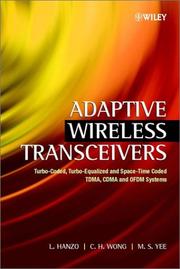 Adaptive wireless transceiversLajos Hanzo, C. H. Wong · 2002
 The Japan that cansay noShintaro Ishihara, Shintarō Ishihara · 1991
- 📕Adaptive Wireless TransceiversC. H. Wong, M. S. Yee · 2003
 Modulation and coding techniques in wireless communicationsE. Krouk, S. Semenov · 2011
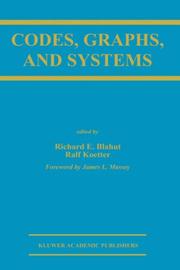 Codes, graphs, and systemsG. David Forney, Richard E. Blahut · 2002
 GokuSean stubenrauch · 2017
Ranked by number of editions on Open Library, a rough measure of how lasting a book is.
🔗 Related topics
- Turbo code In information theory, turbo codes are a class of high-performance forward error correction (FEC) codes developed around 1990–91, but first published in…
- Claude Berrou Claude Berrou (French: [klod bɛʁu]; born 23 September 1951 in Penmarch) is a French professor in electrical engineering at École Nationale Supérieure des…
- Spatial modulation In signal processing, spatial modulation is a technique that enables modulation over space, across different antennas at a transmitter. Unlike multiple-input…
- Orthogonal frequency-division multiplexing In telecommunications, orthogonal frequency-division multiplexing (OFDM) is a type of digital transmission used in digital modulation for encoding digital…
- BCJR algorithm The Bahl-Cocke-Jelinek-Raviv (BCJR) algorithm is an algorithm for maximum a posteriori decoding of error correcting codes defined on trellises (principally…
- Low-density parity-check code Low-density parity-check (LDPC) codes, also known as Gallager codes, are a class of error-correction codes first proposed in 1960. Together with the closely…
- Single-carrier FDMA Single-carrier FDMA (SC-FDMA) is a frequency-division multiple access scheme. Originally known as Carrier Interferometry, it is also called linearly precoded…
- Error correction code In computing, telecommunication, information theory, and coding theory, forward error correction (FEC) or channel coding is a technique used for controlling…