Live briefing
Everything about Low-density parity-check code
Linear error correcting code
Low-density parity-check (LDPC) codes, also known as Gallager codes, are a class of error-correction codes first proposed in 1960. Together with the closely related turbo codes, they have gained prominence in coding theory and information theory since the late 1990s. The codes today are widely used in applications ranging from wireless communications to flash-memory storage. Together with turbo codes, they sparked a revolution in coding theory, achieving order-of-magnitude improvements in performance compared to traditional error correction codes. Wikipedia →
🧭 Start here: a 6-step reading path
- Read the overview: Low-density parity-check codeA 5-minute orientation
- Skim a recent paper: Localized statistics decoding for quantum low-density parity-check codesInfluential work since 2022
- Pick up a classic book: Iterative Error CorrectionThe most-reprinted book on the subject
- Read the landmark paper: Low-density parity-check codesCited 5,586 times
- Go sideways: Error correction codeA closely related topic
- Go sideways: Turbo codeA closely related topic
📖 Definitions
No dictionary entry for this exact phrase.
🗂️ The subject at a glance
🏆 Landmark papers (most cited)
Low-density parity-check codes
Low-density parity check codes over GF(q)
Efficient encoding of low-density parity-check codes
Quantum Low-Density Parity-Check Codes
Performance analysis and code optimization of low density parity-check codes on Rayleigh fading channels
Decoding across the quantum low-density parity-check code landscape
Low-Density Parity-Check Codes for ATSC 3.0
Weight Distribution of Low-Density Parity-Check Codes
🆕 Influential since 2022
Localized statistics decoding for quantum low-density parity-check codes
Toward a 2D Local Implementation of Quantum Low-Density Parity-Check Codes
Quantum Low-Density Parity-Check Codes for Modular Architectures
Rate-compatible multi-edge type low-density parity-check code ensembles for continuous-variable quantum key distribution systems
Analog Information Decoding of Bosonic Quantum Low-Density Parity-Check Codes
📚 Books worth reading
- 📕Iterative Error CorrectionSarah J. Johnson · 2009
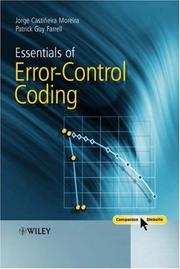 Essentials of error-control codingJorge Castineira Moreira, Jorge Castiñeira Moreira · 2006
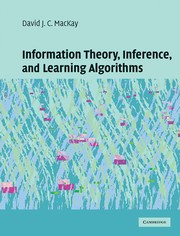 Information Theory, Inference & Learning AlgorithmsDavid J.C. MacKay · 2003
- 📕Low-density parity-check codesRobert G. Gallager · 1963
 Low-density parity-check codesRobert G. Gallagher · 2003
 Iterative error correctionSarah J. Johnson · 2008
 Advances in Computing, Communication, and ControlSrija Unnikrishnan · 2013
- 📕Low-density parity-check codesRobert G Gallager · 1963
Ranked by number of editions on Open Library, a rough measure of how lasting a book is.
🔗 Related topics
- Error correction code In computing, telecommunication, information theory, and coding theory, forward error correction (FEC) or channel coding is a technique used for controlling…
- Turbo code In information theory, turbo codes are a class of high-performance forward error correction (FEC) codes developed around 1990–91, but first published in…
- Sudoku code Sudoku codes are non-linear forward error correcting codes following rules of sudoku puzzles designed for an erasure channel. Based on this model, the…
- Claude Berrou Claude Berrou (French: [klod bɛʁu]; born 23 September 1951 in Penmarch) is a French professor in electrical engineering at École Nationale Supérieure des…
- Lifted-product code A lifted-product code is a quantum error-correcting code constructed by a generalization of the tensor product or Kronecker product to matrices over a…
- Concatenated error correction code In coding theory, concatenated codes form a class of error-correcting codes that are derived by combining an inner code and an outer code. They were conceived…
- Polar code (coding theory) In information theory, polar codes are a linear block error-correcting codes. The code construction is based on a multiple recursive concatenation of a…
- Sparse graph code A sparse graph code is a code which is represented by a sparse graph. Any linear code can be represented as a graph, where there are two sets of nodes…