Live briefing
Everything about Temporal difference learning
Computer programming concept
Temporal difference (TD) learning refers to a class of model-free reinforcement learning methods which learn by bootstrapping from the current estimate of the value function. These methods sample from the environment, like Monte Carlo methods, and perform updates based on current estimates, like dynamic programming methods. Wikipedia →
🧭 Start here: a 6-step reading path
- Read the overview: Temporal difference learningA 5-minute orientation
- Skim a recent paper: Local-Global Temporal Difference Learning for Satellite Video Super-ResolutionInfluential work since 2022
- Pick up a classic book: Imitation of ChristThe most-reprinted book on the subject
- Read the landmark paper: Temporal difference learning and TD-GammonCited 1,065 times
- Go sideways: Peter DayanA closely related topic
- Go sideways: Read MontagueA closely related topic
📖 Definitions
No dictionary entry for this exact phrase.
🗂️ The subject at a glance
🏆 Landmark papers (most cited)
Temporal difference learning and TD-Gammon
Abnormal temporal difference reward-learning signals in major depression
Practical issues in temporal difference learning
Linear Least-Squares algorithms for temporal difference learning
Technical Update: Least-Squares Temporal Difference Learning
Basis Function Adaptation in Temporal Difference Reinforcement Learning
Altered Temporal Difference Learning in Bulimia Nervosa
Average cost temporal-difference learning
🆕 Influential since 2022
Local-Global Temporal Difference Learning for Satellite Video Super-Resolution
A gradual temporal shift of dopamine responses mirrors the progression of temporal difference error in machine learning
Dynamic Difference Learning With Spatio–Temporal Correlation for Deepfake Video Detection
Sample-efficient backtrack temporal difference deep reinforcement learning
Temporal Difference-Aware Graph Convolutional Reinforcement Learning for Multi-Intersection Traffic Signal Control
📚 Books worth reading
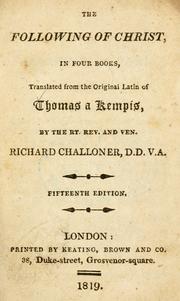 Imitation of ChristThomas à Kempis, Jérôme de Gonnelieu · 1568
 The primacy of the Apostolic see vindicatedFrancis Patrick Kenrick · 1845
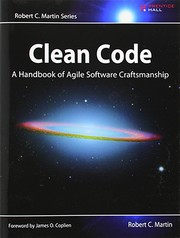 Clean CodeRobert C. Martin · 2008
 Cartesian meditationsEdmund Husserl, Dorion Cairns · 1960
 Language and Automata Theory and ApplicationsAdrian-Horia Dediu · 2012
 Catechism made easyHenry Gibson · 1865
 Saint ColumbaCharles de Montalembert · 1868
- 📕Universities in the flux of timePaul Gibbs · 2014
Ranked by number of editions on Open Library, a rough measure of how lasting a book is.
🔗 Related topics
- Peter Dayan Peter Dayan FRS is a British neuroscientist and computer scientist who is director at the Max Planck Institute for Biological Cybernetics in Tübingen,…
- Read Montague Pendleton Read Montague, Jr. (born 1960) is an American neuroscientist and popular science author. He is the director of the Human Neuroimaging Lab and…
- Q-learning Q-learning is a reinforcement learning algorithm that trains an agent to assign values to its possible actions based on its current state, without requiring…
- Reinforcement learning In machine learning and optimal control, reinforcement learning (RL) (also known as approximate dynamic programming) is concerned with how an intelligent…
- Model-free (reinforcement learning) In reinforcement learning (RL), a model-free algorithm is an algorithm which does not estimate the transition probability distribution (and the reward…
- Actor-critic algorithm The actor-critic algorithm (AC) is a family of reinforcement learning (RL) algorithms that combine policy-based RL algorithms such as policy gradient methods…
- Richard S. Sutton Richard Stuart Sutton FRS FRSC (born 1957 or 1958) is an American-Canadian computer scientist. He is a professor of computing science at the University…
- State–action–reward–state–action State–action–reward–state–action (SARSA) is an algorithm for learning a Markov decision process policy, used in the reinforcement learning area of machine…