Live briefing
Everything about Q-learning
Model-free reinforcement learning algorithm
Q-learning is a reinforcement learning algorithm that trains an agent to assign values to its possible actions based on its current state, without requiring a model of the environment (model-free). It can handle problems with stochastic transitions and rewards without requiring adaptations. Wikipedia →
🧭 Start here: a 6-step reading path
- Read the overview: Q-learningA 5-minute orientation
- Skim a recent paper: Dictionary learning for integrative, multimodal and scalable single-cell analysisInfluential work since 2022
- Pick up a classic book: Artificial intelligenceThe most-reprinted book on the subject
- Read the landmark paper: Deep learningCited 79,315 times
- Go sideways: State–action–reward–state–actionA closely related topic
- Go sideways: Reinforcement learningA closely related topic
📖 Definitions
No dictionary entry for this exact phrase.
🗂️ The subject at a glance
🏆 Landmark papers (most cited)
Deep learning
Gradient-based learning applied to document recognition
Learning representations by back-propagating errors
Absorptive Capacity: A New Perspective on Learning and Innovation
Human-level control through deep reinforcement learning
Physics-informed neural networks: A deep learning framework for solving forward and inverse problems involving nonlinear partial differential equations
A Survey on Transfer Learning
Exploration and Exploitation in Organizational Learning
🆕 Influential since 2022
Dictionary learning for integrative, multimodal and scalable single-cell analysis
TRIPOD+AI statement: updated guidance for reporting clinical prediction models that use regression or machine learning methods
Learning to Prompt for Vision-Language Models
Scientific Machine Learning Through Physics–Informed Neural Networks: Where we are and What’s Next
CARD 2023: expanded curation, support for machine learning, and resistome prediction at the Comprehensive Antibiotic Resistance Database
📚 Books worth reading
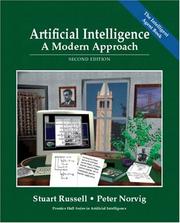 Artificial intelligenceStuart J. Russell, Peter Norvig · 1994
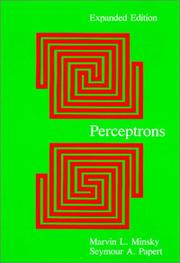 PerceptronsMarvin Minsky, Seymour Papert · 1969
 Proposals that workLawrence F. Locke, Waneen Wyrick Spirduso · 1976
 Machine learningStephen Marsland · 2009
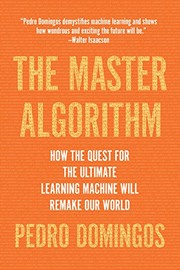 The Master AlgorithmPedro Domingos · 2015
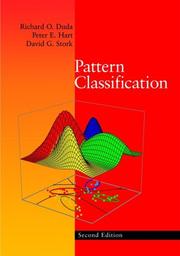 Pattern classificationRichard O. Duda, Peter E. Hart · 2001
 The Elements of Statistical LearningTrevor Hastie, Robert Tibshirani · 2001
 Machine learningKevin P. Murphy, Kevin P. Murphy · 2012
Ranked by number of editions on Open Library, a rough measure of how lasting a book is.
🔗 Related topics
- State–action–reward–state–action State–action–reward–state–action (SARSA) is an algorithm for learning a Markov decision process policy, used in the reinforcement learning area of machine…
- Reinforcement learning In machine learning and optimal control, reinforcement learning (RL) (also known as approximate dynamic programming) is concerned with how an intelligent…
- Temporal difference learning Temporal difference (TD) learning refers to a class of model-free reinforcement learning methods which learn by bootstrapping from the current estimate…
- Markov decision process In decision theory, a Markov decision process (MDP) is a mathematical model for sequential decision making when outcomes are uncertain. It is a type of…
- Proximal policy optimization Proximal policy optimization (PPO) is a reinforcement learning (RL) algorithm for training an intelligent agent. Specifically, it is a policy gradient…
- Deep reinforcement learning Deep reinforcement learning (deep RL) is a subfield of machine learning that combines reinforcement learning (RL) and deep learning. RL considers the problem…
- Actor-critic algorithm The actor-critic algorithm (AC) is a family of reinforcement learning (RL) algorithms that combine policy-based RL algorithms such as policy gradient methods…
- Policy gradient method Policy gradient methods are a class of reinforcement learning algorithms and a sub-class of policy optimization methods. Unlike value-based methods which…