Everything about Surface code
Topological quantum error correcting code
The surface code is a topological quantum error correcting code, and an example of a stabilizer code, defined on a two-dimensional spin lattice. The first type of surface code introduced by Alexei Kitaev in 1997 was the toric code, which gets its name from its periodic boundary conditions, giving it the shape of a torus. These conditions give the model translational invariance, which is useful for analytic study. The toric code is the simplest and most well studied of the quantum double models. It is also the simplest example of topological order—Z2 topological order (first studied in the context of Z2 spin liquid in 1991). The toric code can also be considered to be a Z2 lattice gauge theory in a particular limit. Wikipedia →
🧭 Start here: a 6-step reading path
- Read the overview: Surface codeA 5-minute orientation
- Skim a recent paper: Suppressing quantum errors by scaling a surface code logical qubitInfluential work since 2022
- Pick up a classic book: Ocean observations with EOS/MODISThe most-reprinted book on the subject
- Read the landmark paper: Surface code quantum computing by lattice surgeryCited 616 times
- Go sideways: Physical and logical qubitsA closely related topic
- Go sideways: Topological degeneracyA closely related topic
📖 Definitions
No dictionary entry for this exact phrase.
🏆 Landmark papers (most cited)
Surface code quantum computing by lattice surgery
The XZZX surface code
Repeated quantum error detection in a surface code
A surface code quantum computer in silicon
Towards Practical Classical Processing for the Surface Code
Surface Code Quantum Communication
Majorana Fermion Surface Code for Universal Quantum Computation
The surface code with a twist
🆕 Influential since 2022
Suppressing quantum errors by scaling a surface code logical qubit
Quantum error correction below the surface code threshold
Realizing repeated quantum error correction in a distance-three surface code
Quantum logic with spin qubits crossing the surface code threshold
Realization of an Error-Correcting Surface Code with Superconducting Qubits
📚 Books worth reading
- 📕Ocean observations with EOS/MODISHoward R. Gordon · 1995
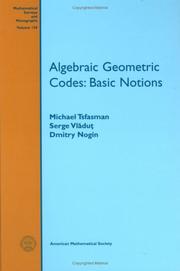 Algebraic geometry codesM. A. Tsfasman, Michael Tsfasman · 2007
 Constrained Coding and Soft Iterative DecodingJohn L. Fan · 2001
Ranked by number of editions on Open Library, a rough measure of how lasting a book is.
🔗 Related topics
- Physical and logical qubits In quantum computing, a qubit is a unit of information analogous to a bit (binary digit) in classical computing, but it is affected by quantum mechanical…
- Topological degeneracy In quantum many-body physics, topological degeneracy is a phenomenon in which the ground state of a gapped many-body Hamiltonian becomes degenerate in…
- String-net liquid In condensed matter physics, a string-net is an extended object whose collective behavior has been proposed as a physical mechanism for topological order…
- Quantum error correction Quantum error correction (QEC) comprises a set of techniques used in quantum memory and quantum computing to protect quantum information from errors arising…
- Quantum double model In condensed matter physics and quantum information theory, the quantum double model, proposed by Alexei Kitaev, is a lattice model that exhibits topological…
- Alexei Kitaev Alexei Yurievich Kitaev (Russian: Алексей Юрьевич Китаев; born August 26, 1963) is a Russian-American theoretical physicist. He is currently a professor…
- Topological quantum computer A topological quantum computer is a type of quantum computer. It utilizes anyons, a type of quasiparticle that occurs in two-dimensional systems. The anyons'…
- Topological order In physics, topological order describes a state or phase of matter that arises in a system with non-local interactions, such as entanglement in quantum…