Live briefing
Everything about Suffix
Morpheme placed at the end of a word
In linguistics, a suffix is an affix which is placed after the stem and the prefix of a word. Common examples are case endings, which indicate the grammatical case of nouns and adjectives, and verb endings, which form the conjugation of verbs. Wikipedia →
🧭 Start here: a 6-step reading path
- Read the overview: SuffixA 5-minute orientation
- Skim a recent paper: Reconstruction of Sets of Strings From Prefix/Suffix CompositionsInfluential work since 2022
- Pick up a classic book: English words with native roots and with Greek, Latin, or Romance suffixes ..The most-reprinted book on the subject
- Read the landmark paper: An algorithm for suffix strippingCited 4,604 times
- Go sideways: InflectionA closely related topic
- Go sideways: Old Norse morphologyA closely related topic
📖 Definitions
Noun A morpheme added at the end of a word to modify the word's meaning.
Noun A subscript.
Noun A final segment of a string of characters.
Verb To append (something) to the end of something else.
🗂️ The subject at a glance
🏆 Landmark papers (most cited)
An algorithm for suffix stripping
Suffix Arrays: A New Method for On-Line String Searches
A Space-Economical Suffix Tree Construction Algorithm
On-line construction of suffix trees
Replacing suffix trees with enhanced suffix arrays
Linear work suffix array construction
Compressed Suffix Arrays and Suffix Trees with Applications to Text Indexing and String Matching
A taxonomy of suffix array construction algorithms
🆕 Influential since 2022
Reconstruction of Sets of Strings From Prefix/Suffix Compositions
SGD-rα: A real-time α-suffix averaging method for SGD with biased gradient estimates
Ist Gendern mit Glottisverschlusslaut ungrammatisch? Ein Analysevorschlag für das Suffix [?in] als phonologisches Wort
Optimal in-place suffix sorting
New methods for analysing diachronic suffix competition across registers
📚 Books worth reading
 English words with native roots and with Greek, Latin, or Romance suffixes ..George Albert Nicholson · 1916
 A Manual of German Prefixes and SuffixesJames Shannon Blackwell · 1888
- 📕English SuffixesIves Trevian · 2015
 Diminutive, augmentative, and pejorative suffixes in modern SpanishAnthony Gooch · 1967
- 📕Nullsuffix und Nullsuffigierung im RussischenRenate Menge-Verbeeck · 1973
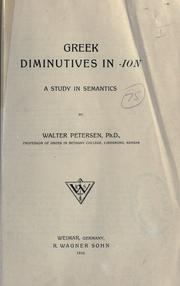 Greek diminutives in -IONWalter Petersen · 1910
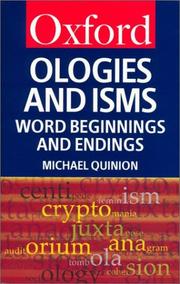 Ologies and IsmsMichael Quinion · 2002
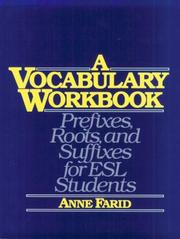 A Vocabulary WorkbookAnne Farid · 1985
Ranked by number of editions on Open Library, a rough measure of how lasting a book is.
🔗 Related topics
- Inflection In linguistic morphology, inflection (less commonly, inflexion) is a process of word formation in which a word is modified to express different grammatical…
- Old Norse morphology Old Norse has three categories of verbs (strong, weak, & present-preterite) and two categories of nouns (strong, weak). Conjugation and declension are…
- Udmurt grammar This article deals with the grammar of the Udmurt language. Udmurt pronouns are inflected much in the same way that their referent nouns are. However,…
- Old Saxon grammar The grammar of Old Saxon is highly inflected, similar to that of Old English or Latin. As an ancient Germanic language, the morphological system of Old…
- Old English grammar The grammar of Old English differs greatly from Modern English, predominantly being much more inflected. As a Germanic language, Old English has a morphological…
- Proto-Germanic grammar Historical linguistics has made tentative postulations about and multiple varyingly different reconstructions of Proto-Germanic grammar, as inherited from…
- Ukrainian grammar Ukrainian grammar is complex and characterised by a high degree of inflection; moreover, it has a relatively free word order, although the dominant arrangement…
- Finnish grammar The Finnish language is spoken by the majority of the population in Finland and by ethnic Finns elsewhere. Unlike the Indo-European languages spoken in…