Everything about Subset simulation
Subset simulation is a method used in reliability engineering to compute small failure probabilities encountered in engineering systems. The basic idea is to express a small failure probability as a product of larger conditional probabilities by introducing intermediate failure events. This conceptually converts the original rare-event problem into a series of frequent-event problems that are easier to solve. In the actual implementation, samples conditional on intermediate failure events are adaptively generated to gradually populate from the frequent to rare event region. These 'conditional samples' provide information for estimating the complementary cumulative distribution function (CCDF) of the quantity of interest, covering the high as well as the low probability regions. They can also be used for investigating the cause and consequence of failure events. The generation of conditional samples is not trivial but can be performed efficiently using Markov chain Monte Carlo (MCMC). Wikipedia →
🧭 Start here: a 6-step reading path
- Read the overview: Subset simulationA 5-minute orientation
- Skim a recent paper: An adaptive subset simulation algorithm for system reliability analysis with discontinuous limit statesInfluential work since 2022
- Pick up a classic book: Using MPIThe most-reprinted book on the subject
- Read the landmark paper: Estimation of small failure probabilities in high dimensions by subset simulationCited 2,209 times
- Go sideways: Line samplingA closely related topic
- Go sideways: Importance samplingA closely related topic
📖 Definitions
No dictionary entry for this exact phrase.
🗂️ The subject at a glance
🏆 Landmark papers (most cited)
Estimation of small failure probabilities in high dimensions by subset simulation
Reliability-based design optimization using kriging surrogates and subset simulation
MCMC algorithms for Subset Simulation
Application of subset simulation methods to reliability benchmark problems
Subset simulation for structural reliability sensitivity analysis
Accelerated subset simulation with neural networks for reliability analysis
Efficient Simulation Budget Allocation for Selecting an Optimal Subset
Hamiltonian Monte Carlo methods for Subset Simulation in reliability analysis
🆕 Influential since 2022
An adaptive subset simulation algorithm for system reliability analysis with discontinuous limit states
Estimation of small failure probability using generalized subset simulation
Efficient seismic reliability and fragility analysis of lifeline networks using subset simulation
Combined relevance vector machine technique and subset simulation importance sampling for structural reliability
Failure-Informed Adaptive Sampling for PINNs, Part II: Combining with Re-sampling and Subset Simulation
📚 Books worth reading
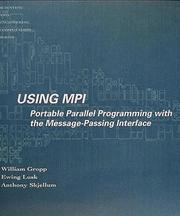 Using MPIWilliam Gropp, Ewing Lusk · 1994
 Introduction to automata theory, languages, and computationJohn E. Hopcroft, Jeffrey D. Ullman · 1979
 The Elements of Statistical LearningTrevor Hastie, Robert Tibshirani · 2001
 Introduction to Probability and StatisticsJ. Susan Milton, Jesse C. Arnold · 1990
 Introduction to Multiple Time Series AnalysisHelmut Lütkepohl, Helmut Lutkepohl · 1991
- 📕Engineering Risk Assessment with Subset SimulationSiu-Kui Au, Yu Wang · 2014
 Forecasting Aggregated Vector ARMA ProcessesHelmut Lütkepohl, Helmut Lütkepohl · 1987
 Theory of computationDerick Wood · 1987
Ranked by number of editions on Open Library, a rough measure of how lasting a book is.
🔗 Related topics
- Line sampling Line sampling is a method used in reliability engineering to compute small (i.e., rare event) failure probabilities encountered in engineering systems…
- Importance sampling Importance sampling is a Monte Carlo method for evaluating properties of a particular distribution, while only having samples generated from a different…
- Markov chain Monte Carlo In statistics, Markov chain Monte Carlo (MCMC) is a class of algorithms used to draw samples from a probability distribution. Given a probability distribution…
- Monte Carlo method Monte Carlo methods, also called the Monte Carlo experiments or Monte Carlo simulations, are a broad class of computational algorithms based on repeated…
- Probability bounds analysis Probability bounds analysis (PBA) is a collection of methods of uncertainty propagation for making qualitative and quantitative calculations in the face…
- Particle filter Particle filters, also known as sequential Monte Carlo methods, are a set of Monte Carlo algorithms used to find approximate solutions for filtering problems…
- Resampling (statistics) In statistics, resampling is the creation of new samples based on one observed sample. Resampling methods are: Permutation tests (also re-randomization…
- Rare event sampling Rare event sampling is an umbrella term for a group of computer simulation methods intended to selectively sample 'special' regions of the dynamic space…