Everything about Stimulus control
Key tenet of behavioral analysis
In behavioral psychology, stimulus control is a phenomenon in operant conditioning that occurs when an organism behaves in one way in the presence of a given stimulus and another way in its absence. A stimulus that modifies behavior in this manner is either a discriminative stimulus or stimulus delta. For example, the presence of a stop sign at a traffic intersection alerts the driver to stop driving and increases the probability that braking behavior occurs. Stimulus control does not force behavior to occur, as it is a direct result of historical reinforcement contingencies, as opposed to reflexive behavior elicited through classical conditioning. Wikipedia →
🧭 Start here: a 6-step reading path
- Read the overview: Stimulus controlA 5-minute orientation
- Skim a recent paper: Context-Dependent Inhibitory Control of Stimulus-Specific AdaptationInfluential work since 2022
- Pick up a classic book: Behavior ModificationThe most-reprinted book on the subject
- Read the landmark paper: Control of goal-directed and stimulus-driven attention in the brainCited 11,365 times
- Go sideways: Operant conditioningA closely related topic
- Go sideways: Experimental analysis of behaviorA closely related topic
📖 Definitions
No dictionary entry for this exact phrase.
🗂️ The subject at a glance
🏆 Landmark papers (most cited)
Control of goal-directed and stimulus-driven attention in the brain
STIMULUS CONTROL OF BEHAVIORAL HISTORY
The stimulus control of biting inAplysia
Cognitive control in bilinguals: Advantages in Stimulus–Stimulus inhibition
Complex Stimulus Control and Equivalence
Stimulus Control: Part I
Stimulus Control Shaping and Stimulus Control Topographies
Resurgence: Response competition, stimulus control, and reinforcer control
🆕 Influential since 2022
Context-Dependent Inhibitory Control of Stimulus-Specific Adaptation
Stimulus control for insomnia: A systematic review and meta‐analysis
Multi-stimulus synergistic control soft actuators based on laterally heterogeneous MXene structure
Stimulus-Responsive Control of Transition States on Nanohybrid Polymer–Metal Catalysts
A multi-stimulus-responsive bionic fish microrobot for remote intelligent control applications
📚 Books worth reading
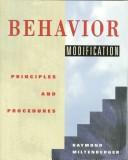 Behavior ModificationRaymond G. Miltenberger · 1996
 Don't shoot the dog!Karen Pryor · 1984
 Cognitive aspects of stimulus controlWerner K. Honig · 1992
 End the insomnia struggleColleen Ehrnstrom · 2016
- 📕HIPAA amendments in the stimulus lawKathy Bakich · 2009
 Self control in society, mind, and brainKevin Ochsner, Yaacov Trope · 2010
 Behavior analysis for lasting changeG. Roy Mayer · 2011
 Stimulus control of behaviorH. Keith Rodewald · 1979
Ranked by number of editions on Open Library, a rough measure of how lasting a book is.
🔗 Related topics
- Operant conditioning Operant conditioning, also called instrumental conditioning, is a learning process in which voluntary behaviors are modified by association with the addition…
- Experimental analysis of behavior The experimental analysis of behavior is a science that studies the behavior of individuals across a variety of species. A key early scientist was B. F…
- Discrimination learning Discrimination learning is defined in psychology as the ability to respond differently to different stimuli. This type of learning is used in studies regarding…
- Operant conditioning chamber An operant conditioning chamber (also known as a Skinner box) is a laboratory apparatus used to study animal behavior. The operant conditioning chamber…
- Match-to-sample task Short-term memory for learned associations has been studied using the match-to-sample task (and the related delayed match-to-sample task, and non-match…
- James A Dinsmoor James "Jim" A. Dinsmoor (October 4, 1921 – August 25, 2005) was an American experimental psychologist who published work in the field of the experimental…
- Behaviorism Behaviorism is a systematic approach to understanding the behavior of humans and other animals. It assumes that behavior is either a reflex elicited by…
- Behavioral momentum Behavioral momentum is a theory in quantitative analysis of behavior and is a behavioral metaphor based on physical momentum. It describes the general…