Everything about Self-synchronizing code
Type of code in coding theory
In coding theory, especially in telecommunications, a self-synchronizing code is a uniquely decodable code in which the symbol stream formed by a portion of one code word, or by the overlapped portion of any two adjacent code words, is not a valid code word. Put another way, a set of strings over an alphabet is called a self-synchronizing code if for each string obtained by concatenating two code words, the substring starting at the second symbol and ending at the second-last symbol does not contain any code word as substring. Every self-synchronizing code is a prefix code, but not all prefix codes are self-synchronizing. Wikipedia →
🧭 Start here: a 6-step reading path
- Read the overview: Self-synchronizing codeA 5-minute orientation
- Pick up a classic book: BibleThe most-reprinted book on the subject
- Read the landmark paper: Self-synchronizing Huffman codes (Corresp.)Cited 131 times
- Go sideways: Prefix codeA closely related topic
- Go sideways: Free monoidA closely related topic
📖 Definitions
No dictionary entry for this exact phrase.
🗂️ The subject at a glance
🏆 Landmark papers (most cited)
Self-synchronizing Huffman codes (Corresp.)
A self-synchronizing method for asynchronous code acquisition in band-limited spread spectrum communications
High-Rate Self-Synchronizing Codes
Self-synchronizing codes derived from binary cyclic codes
Choice of Prefix in Self-Synchronizing Codes
Self-synchronizing Reed-Solomon codes (Corresp.)
S2-Code: A Resilient and Lightweight Self-Synchronizing Authentication Protocol for Unreliable IoT Networks
📚 Books worth reading
 BibleBible · 1200
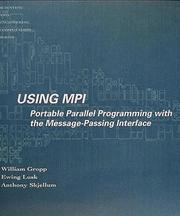 Using MPIWilliam Gropp, Ewing Lusk · 1994
 Treaty Occupationay ToxicologySuelen Queiroz · 2010
 Practical Electronics for InventorsPaul Scherz · 2000
 Neuro-fuzzy and soft computingJyh-Shing Roger Jang, Chuen-Tsai Sun · 1996
 The mindbody codeMario E. Martinez, Mario Martinez · 2014
 Network and Parallel ComputingJames J. Park · 2012
 Adaptive and Natural Computing AlgorithmsMarco Tomassini · 2013
Ranked by number of editions on Open Library, a rough measure of how lasting a book is.
🔗 Related topics
- Prefix code A prefix code is a type of code system distinguished by its possession of the prefix property, which requires that there is no whole code word in the system…
- Free monoid In abstract algebra, the free monoid on a set is the monoid whose elements are all the finite sequences (or strings) of zero or more elements from that…
- Variable-length encoding In coding theory, variable-length encoding is a symbol encoding scheme in which codes of differing lengths are used to encode symbols for representation…
- 8b/10b encoding In telecommunications, 8b/10b is a line code that maps 8-bit words to 10-bit symbols to achieve DC balance and bounded disparity, and at the same time…
- Syncword In computer networks, a syncword, sync character, sync sequence or preamble is used to synchronize a data transmission by providing bit/symbol clock or…
- String (computer science) In computer programming, a string is traditionally a sequence of characters, either as a literal constant or as some kind of variable. The latter may allow…
- Asynchronous communication In telecommunications, asynchronous communication is transmission of data, generally without the use of an external clock signal, where data can be transmitted…
- Fibonacci coding In mathematics and computing, Fibonacci coding is a universal code which encodes positive integers into binary code words. It is one example of representations…