Live briefing
Everything about Fibonacci coding
Universal code which encodes positive integers into binary code words
In mathematics and computing, Fibonacci coding is a universal code which encodes positive integers into binary code words. It is one example of representations of integers based on Fibonacci numbers. Each code word ends with "11" and contains no other instances of "11" before the end. Wikipedia →
🧭 Start here: a 6-step reading path
- Read the overview: Fibonacci codingA 5-minute orientation
- Skim a recent paper: Error detection and correction for coding theory on k-order Gaussian Fibonacci matricesInfluential work since 2022
- Pick up a classic book: The Da Vinci CodeThe most-reprinted book on the subject
- Read the landmark paper: Fibonacci matrices, a generalization of the “Cassini formula”, and a new coding theoryCited 92 times
- Go sideways: Negafibonacci codingA closely related topic
- Go sideways: Complete sequenceA closely related topic
📖 Definitions
No dictionary entry for this exact phrase.
🗂️ The subject at a glance
🏆 Landmark papers (most cited)
Fibonacci matrices, a generalization of the “Cassini formula”, and a new coding theory
The generalized relations among the code elements for Fibonacci coding theory
High-capacity quantum Fibonacci coding for key distribution
A Fibonacci-polynomial based coding method with error detection and correction
A New Application to Coding Theory via Fibonacci and Lucas Numbers
A new coding/decoding algorithm using Fibonacci numbers
Coding theory on generalized Fibonaccin-step polynomials
Coding theory on the m-extension of the Fibonacci p-numbers
🆕 Influential since 2022
Error detection and correction for coding theory on k-order Gaussian Fibonacci matrices
Coding theory for h(x)-Fibonacci polynomials
Multidimensional Fibonacci Coding
A new coding algorithm using Fibonacci numbers, linear mappings, and change of basis
Super fibonacci graceful anti – magic labeling for flower graphs and python coding
📚 Books worth reading
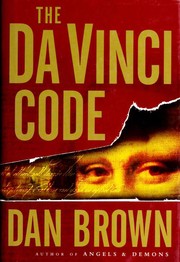 The Da Vinci CodeDan Brown · 2003
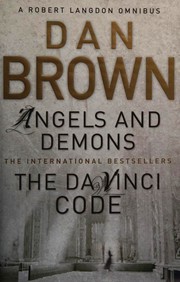 Novels (Angels & Demons / Da Vinci Code)Dan Brown · 2003
Ranked by number of editions on Open Library, a rough measure of how lasting a book is.
🔗 Related topics
- Negafibonacci coding In mathematics, negafibonacci coding is a universal code which encodes nonzero integers into binary code words. It is similar to Fibonacci coding, except…
- Complete sequence In mathematics, a sequence of natural numbers is called a complete sequence if every positive integer can be expressed as a sum of values in the sequence…
- Zeckendorf's theorem Zeckendorf's theorem, named after amateur mathematician Edouard Zeckendorf, is a result about the representation of integers as sums of Fibonacci numbers…
- Unary coding Unary coding, or the unary numeral system, is an entropy encoding that represents a natural number, n, with n ones followed by a zero (if the term natural…
- Fibbinary number In mathematics, the fibbinary numbers are the numbers whose binary representation does not contain two consecutive ones. That is, they are sums of distinct…
- Asymmetric numeral systems Asymmetric numeral systems (ANS) is a family of entropy encoding methods introduced by Jarosław (Jarek) Duda from Jagiellonian University, used in data…
- Fibonacci word In mathematics, more specifically in combinatorics on words, a Fibonacci word is a specific sequence of binary digits (or symbols from any two-letter alphabet)…
- Elias delta coding Elias δ code or Elias delta code is a universal code encoding the positive integers developed by Peter Elias. To code a number X ≥ 1: Let N = ⌊log2 X⌋;…