Live briefing

Everything about Secant method
Root-finding method
In numerical analysis, the secant method is a root-finding algorithm that uses a succession of roots of secant lines to better approximate a root of a function f. The secant method can be thought of as a finite-difference approximation of Newton's method, so it is considered a quasi-Newton method. Historically, it is as an evolution of the method of false position, which predates Newton's method by over 3000 years. Wikipedia →
🧭 Start here: a 6-step reading path
- Read the overview: Secant methodA 5-minute orientation
- Skim a recent paper: A three-term projection method based on spectral secant equation for nonlinear monotone equationsInfluential work since 2022
- Pick up a classic book: A treatise on ship-building and navigationThe most-reprinted book on the subject
- Read the landmark paper: The Secant method for simultaneous nonlinear equationsCited 133 times
- Go sideways: Muller's methodA closely related topic
- Go sideways: Steffensen's methodA closely related topic
📖 Definitions
Noun An iterative numerical method for finding a root of an equation f(x)=0, using a succession of roots of secant lines to better approximate the root.
🏆 Landmark papers (most cited)
The Secant method for simultaneous nonlinear equations
Secant-method adjustment for structural models
On the secant method
The Secant method for nondifferentiable operators
A secant method for multiple roots
An error analysis for the secant method
New sufficient convergence conditions for the secant method
Secant modification of Newton's method
🆕 Influential since 2022
A three-term projection method based on spectral secant equation for nonlinear monotone equations
A modified secant equation quasi-Newton method for unconstrained optimization
Competitive secant (BFGS) methods based on modified secant relations for unconstrained optimization
An improved method for computing acoustic ray incident angle based on secant method
Secant penalized BFGS: a noise robust quasi-Newton method via penalizing the secant condition
📚 Books worth reading
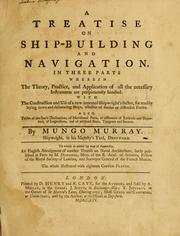 A treatise on ship-building and navigationMungo Murray · 1754
 Cyclomathesis: or, an easy introduction to the several branches of the mathematicsWilliam Emerson, William Emerson · 1763
- 📕The elements of EuclidEuclid, Henry Law · 1726
- 📕A compendium of algebraJohn Ward (of Chester) · 1695
 Introduction to numerical analysis and scientific computingNabil Nassif · 2014
 Engineering Modelling and AnalysisDavid Walker, Michael Leonard · 2009
 Mathematical Tables : Contrived after a Most Comprehensive MethodJohn Wallis, Edmond Halley · 1726
- 📕Arithmetical trigonometryMark Forster · 1650
Ranked by number of editions on Open Library, a rough measure of how lasting a book is.
🔗 Related topics
- Muller's method Muller's method is a root-finding algorithm, a numerical method for solving equations of the form f(x) = 0. It was first presented by David E. Muller in…
- Steffensen's method In numerical analysis, Steffensen's method is an iterative method named after Johan Frederik Steffensen for numerical root-finding that is similar to the…
- Root-finding algorithm In numerical analysis, a root-finding algorithm is an algorithm for finding zeros, also called roots, of a function. A root of the function f is a number…
- Newton's method In numerical analysis, the Newton–Raphson method, also known simply as Newton's method, named after Isaac Newton and Joseph Raphson, is a root-finding…
- Regula falsi In mathematics, the regula falsi, method of false position, or false position method is a family of algorithms used to solve linear equations and smooth…
- Sidi's generalized secant method Sidi's generalized secant method is a root-finding algorithm, that is, a numerical method for solving equations of the form f(x)=0 . The method was published…
- Aitken's delta-squared process In numerical analysis, Aitken's delta-squared process or Aitken extrapolation is a series acceleration method used for accelerating the rate of convergence…
- Halley's method In numerical analysis, Halley's method is a root-finding algorithm used for functions of one real variable with a continuous second derivative. Edmond…