Live briefing

Everything about Root-finding algorithm
Algorithms for zeros of functions
In numerical analysis, a root-finding algorithm is an algorithm for finding zeros, also called roots, of a function. A root of the function f is a number x such that f(x) = 0. As the zeros typically cannot be computed exactly, nor expressed in closed form, root-finding algorithms provide approximations to the zeros. The functions considered are typically continuous or, for most algorithms, differentiable. For real functions and complex functions, the approximations are commonly expressed as floating-point numbers, sometimes with error bounds. Wikipedia →
🧭 Start here: a 6-step reading path
- Read the overview: Root-finding algorithmA 5-minute orientation
- Skim a recent paper: A Novel Root-Finding Algorithm With Engineering Applications and its Dynamics via Computer TechnologyInfluential work since 2022
- Pick up a classic book: An introduction to computer scienceThe most-reprinted book on the subject
- Read the landmark paper: The root-MUSIC algorithm for direction finding with interpolated arraysCited 221 times
- Go sideways: Newton's methodA closely related topic
- Go sideways: Polynomial root-findingA closely related topic
📖 Definitions
No dictionary entry for this exact phrase.
🏆 Landmark papers (most cited)
The root-MUSIC algorithm for direction finding with interpolated arrays
A New Hybrid Root-Finding Algorithm to Solve Transcendental Equations Using Arcsine Function
On K nig's root-finding algorithms*
Efficient root-finding algorithm with application to list decoding of algebraic-geometric codes
Complex Root Finding Algorithm Based on Delaunay Triangulation
A root-finding algorithm based on Newton's method
A new optimal root-finding iterative algorithm: local and semilocal analysis with polynomiography
Algorithms for quaternion polynomial root-finding
🆕 Influential since 2022
A Novel Root-Finding Algorithm With Engineering Applications and its Dynamics via Computer Technology
Graphical and Numerical Study of a Newly Developed Root-Finding Algorithm and Its Engineering Applications
Improved Aberth–Ehrlich root-finding algorithm and its further application for binary microlensing
Flux density waveform control based on root-finding algorithms
Randomized Block-Coordinate Optimistic Gradient Algorithms for Root-Finding Problems
📚 Books worth reading
 An introduction to computer scienceJean-Paul Tremblay, Richard B. Bunt · 1979
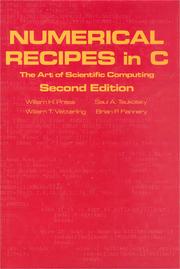 NUMERICAL RECIPES IN CWilliam H. Press, Brian P. Flannery · 1988
 Numerical recipes in Fortran 90William H. Press, Saul A. Teukolsky · 1996
 Engineering Modelling and AnalysisDavid Walker, Michael Leonard · 2009
 Numerical and statistical methods for bioengineeringMichael R. King · 2008
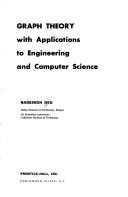 Graph theory with applications to engineering and computer scienceNarsingh Deo, Narsingh Deo · 1974
 Data structures & algorithms in JavaRobert Lafore · 2003
 Principles of gene manipulation and genomicsS. B. Primrose · 2006
Ranked by number of editions on Open Library, a rough measure of how lasting a book is.
🔗 Related topics
- Newton's method In numerical analysis, the Newton–Raphson method, also known simply as Newton's method, named after Isaac Newton and Joseph Raphson, is a root-finding…
- Polynomial root-finding Finding the roots of polynomials is a long-standing problem that has been extensively studied throughout the history and substantially influenced the developmen…
- Sidi's generalized secant method Sidi's generalized secant method is a root-finding algorithm, that is, a numerical method for solving equations of the form f(x)=0 . The method was published…
- List of numerical analysis topics This is a list of numerical analysis topics. Validated numerics Iterative method Rate of convergence — the speed at which a convergent sequence approaches…
- Secant method In numerical analysis, the secant method is a root-finding algorithm that uses a succession of roots of secant lines to better approximate a root of a…
- Muller's method Muller's method is a root-finding algorithm, a numerical method for solving equations of the form f(x) = 0. It was first presented by David E. Muller in…
- Halley's method In numerical analysis, Halley's method is a root-finding algorithm used for functions of one real variable with a continuous second derivative. Edmond…
- Brent's method In numerical analysis, Brent's method is a hybrid root-finding algorithm combining the bisection method, the secant method and inverse quadratic interpolation…