Everything about Scheme (programming language)
Dialect of Lisp

Scheme is a dialect of the Lisp family of programming languages. Scheme was created during the 1970s at the MIT Computer Science and Artificial Intelligence Laboratory and released by its developers, Guy L. Steele and Gerald Jay Sussman, via a series of memos now known as the Lambda Papers. It was the first dialect of Lisp to choose lexical scope and the first to require implementations to perform tail-call optimization, giving stronger support for functional programming and associated techniques such as recursive algorithms. It was also one of the first programming languages to support first-class continuations. It had a significant influence on the effort that led to the development of Common Lisp. Wikipedia →
🧭 Start here: a 6-step reading path
- Read the overview: Scheme (programming language)A 5-minute orientation
- Skim a recent paper: Discussion on the Design of Ideological and Political Course and Online Teaching Scheme of Programming Language CourseInfluential work since 2022
- Pick up a classic book: Structure and Interpretation of Computer Programs (SICP)The most-reprinted book on the subject
- Read the landmark paper: Bee: an integrated development environment for the Scheme programming languageCited 9 times
- Go sideways: Hygienic macroA closely related topic
- Go sideways: Closure (computer programming)A closely related topic
📖 Definitions
No dictionary entry for this exact phrase.
🏆 Landmark papers (most cited)
Bee: an integrated development environment for the Scheme programming language
An Efficient New Scheme of Fitness Evaluation in Genetic Programming using the R Language
The Programming Language Scheme
The Scheme Programming Language
Research on Scales Reflecting Cup Based on Scheme Macro Language Programming
Developing a Novel Pair Programming Scheme for Improving Coding Skills and Learning Block Instructions of an Educational Programming Language: Entry
🆕 Influential since 2022
📚 Books worth reading
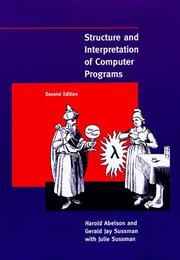 Structure and Interpretation of Computer Programs (SICP)Harold Abelson, Gerald Jay Sussman · 1985
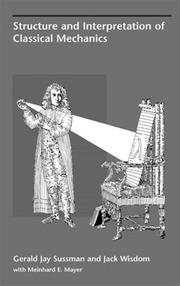 Structure and Interpretation of Classical MechanicsGerald Jay Sussman, Jack Widsom · 2001
 The Scheme Programming LanguageR. Kent Dybvig · 2003
 The Reasoned SchemerDaniel P. Friedman, William E. Byrd · 2005
 The Scheme programming languageR. Kent Dybvig · 1987
 The Little SchemerDaniel P. Friedman, Matthias Felleisen · 1995
 The seasoned schemerDaniel P. Friedman · 1995
 Programming in SchemeEisenberg, Michael. · 1988
Ranked by number of editions on Open Library, a rough measure of how lasting a book is.
🔗 Related topics
- Hygienic macro In computer science, hygienic macros are macros whose expansion is guaranteed not to cause the accidental capture of identifiers. They are a feature of…
- Closure (computer programming) In programming languages, a closure, also lexical closure or function closure, is a technique for implementing lexically scoped name binding in a language…
- Lisp (programming language) Lisp (historically LISP, an abbreviation of "list processing") is a family of programming languages with a long history and a distinctive, fully parenthesized…
- M-expression In the Lisp programming language, M-expressions (or meta-expressions) were an early proposed syntax for Lisp, inspired by contemporary languages such as…
- Common Lisp Common Lisp (CL) is a dialect of the Lisp programming language, published in American National Standards Institute (ANSI) standard document ANSI INCITS…
- Macro (computer science) In computer programming, a macro (short for "macro instruction"; from Greek μακρο- 'long, large') is a rule or pattern that specifies how a certain input…
- MLisp "MLisp" is also another name for Mocklisp, a stripped-down version of Lisp used as an extension language in Gosling Emacs. MLISP is a variant of Lisp with…
- Scope (computer programming) In computer programming, the scope of a name binding (an association of a name to an entity, such as a variable) is the part of a program in which the…