Live briefing
Everything about M-expression
Proposed syntax for the Lisp language
In the Lisp programming language, M-expressions were an early proposed syntax for Lisp, inspired by contemporary languages such as Fortran and ALGOL. The notation was never implemented into the language and, as such, it was never finalized. Wikipedia →
🧭 Start here: a 6-step reading path
- Read the overview: M-expressionA 5-minute orientation
- Skim a recent paper: The Effect of Nitrogen Fertilization on the Expression of Slow-Mildewing Resistance in Knox WheatInfluential work since 2022
- Pick up a classic book: Molecular biology of the geneThe most-reprinted book on the subject
- Read the landmark paper: Analysis of Relative Gene Expression Data Using Real-Time Quantitative PCR and the 2−ΔΔCT MethodCited 168,064 times
- Go sideways: Lisp (programming language)A closely related topic
- Go sideways: MLispA closely related topic
📖 Definitions
No dictionary entry for this exact phrase.
🗂️ The subject at a glance
🏆 Landmark papers (most cited)
Analysis of Relative Gene Expression Data Using Real-Time Quantitative PCR and the 2−ΔΔCT Method
Gene set enrichment analysis: A knowledge-based approach for interpreting genome-wide expression profiles
edgeR : a Bioconductor package for differential expression analysis of digital gene expression data
limma powers differential expression analyses for RNA-sequencing and microarray studies
Differential expression analysis for sequence count data
Salmon provides fast and bias-aware quantification of transcript expression
Cluster analysis and display of genome-wide expression patterns
Gene Expression Omnibus: NCBI gene expression and hybridization array data repository
🆕 Influential since 2022
The Effect of Nitrogen Fertilization on the Expression of Slow-Mildewing Resistance in Knox Wheat
Deep Facial Expression Recognition: A Survey
Lactic acid promotes PD-1 expression in regulatory T cells in highly glycolytic tumor microenvironments
hdWGCNA identifies co-expression networks in high-dimensional transcriptomics data
Cell type and gene expression deconvolution with BayesPrism enables Bayesian integrative analysis across bulk and single-cell RNA sequencing in oncology
📚 Books worth reading
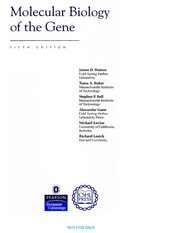 Molecular biology of the geneJames D. Watson, Nancy H. Hopkins · 1965
 Prose du mondeMaurice Merleau-Ponty · 1973
 VoiceElaine Schmidt · 2018
- 📕The Welwyn Hatfield A1(M) Hatfield Corridor district plan · 1981
 Computational Modeling of Gene Regulatory Networks a PrimerHamid Bolouri · 2008
Ranked by number of editions on Open Library, a rough measure of how lasting a book is.
🔗 Related topics
- Lisp (programming language) Lisp (historically LISP, an abbreviation of "list processing") is a family of programming languages with a long history and a distinctive, fully parenthesized…
- MLisp "MLisp" is also another name for Mocklisp, a stripped-down version of Lisp used as an extension language in Gosling Emacs. MLISP is a variant of Lisp with…
- Scheme (programming language) Scheme is a dialect of the Lisp family of programming languages. Scheme was created during the 1970s at the MIT Computer Science and Artificial Intelligence…
- S-expression In computer programming, an S-expression (or symbolic expression, abbreviated as sexpr or sexp) is an expression in a like-named notation for nested list…
- History of the Scheme programming language The history of the Scheme programming language begins with the development of earlier members of the Lisp family of languages during the second half of…
- PC-LISP PC-LISP is an implementation of the Franz Lisp dialect by Peter Ashwood-Smith. Version 2.07 was released on 1 February 1986, and version 3.00 was released…
- CAR and CDR In computer programming, CAR (car) /kɑːr/ and CDR (cdr) (/ˈkʌdər/ or /ˈkʊdər/) are primitive operations on cons cells (or "non-atomic S-expressions") introduced…
- Hygienic macro In computer science, hygienic macros are macros whose expansion is guaranteed not to cause the accidental capture of identifiers. They are a feature of…